Specific question while you read? Ask Catalina, the Barranquilla Guide concierge.¿Pregunta específica mientras lees? Pregúntale a Catalina, la concierge de Barranquilla Guide.Chat with Catalina ›Habla con Catalina ›
A mid-century garden barrio in Barranquilla's north-center: shaded streets, single-family houses with gardens, and a settled middle-class calm that costs less than El Prado.
Un barrio jardin de mediados de siglo en el centro-norte de Barranquilla: calles con sombra, casas unifamiliares con jardin y una calma de clase media que cuesta menos que El Prado.
Where Ciudad Jardin sitsDonde queda Ciudad Jardin
Ciudad Jardin sits in the Norte Centro Historico locality, in the central-north of the city, roughly bounded by Calles 76 and 80 and Carreras 42 and 43. It is north of El Prado and west of the older downtown, on land that slopes gently, which is part of why the original planners liked it. The Country Club de Barranquilla, with its 18-hole golf course, borders the area to the west. To see how it lines up against El Prado, Alto Prado and Villa Country, start with our guide to Barranquilla's neighborhoods.
Ciudad Jardin queda en la localidad Norte Centro Historico, en el centro-norte de la ciudad, mas o menos entre las calles 76 y 80 y las carreras 42 y 43. Esta al norte de El Prado y al occidente del centro antiguo, sobre un terreno con leves desniveles, lo que en parte explica por que les gusto a los urbanizadores originales. El Country Club de Barranquilla, con su cancha de golf de 18 hoyos, bordea la zona por el occidente. Para ver como se compara con El Prado, Alto Prado y Villa Country, empieza por nuestra guia de los barrios de Barranquilla.
A garden barrio from the mid-centuryUn barrio jardin de mediados de siglo
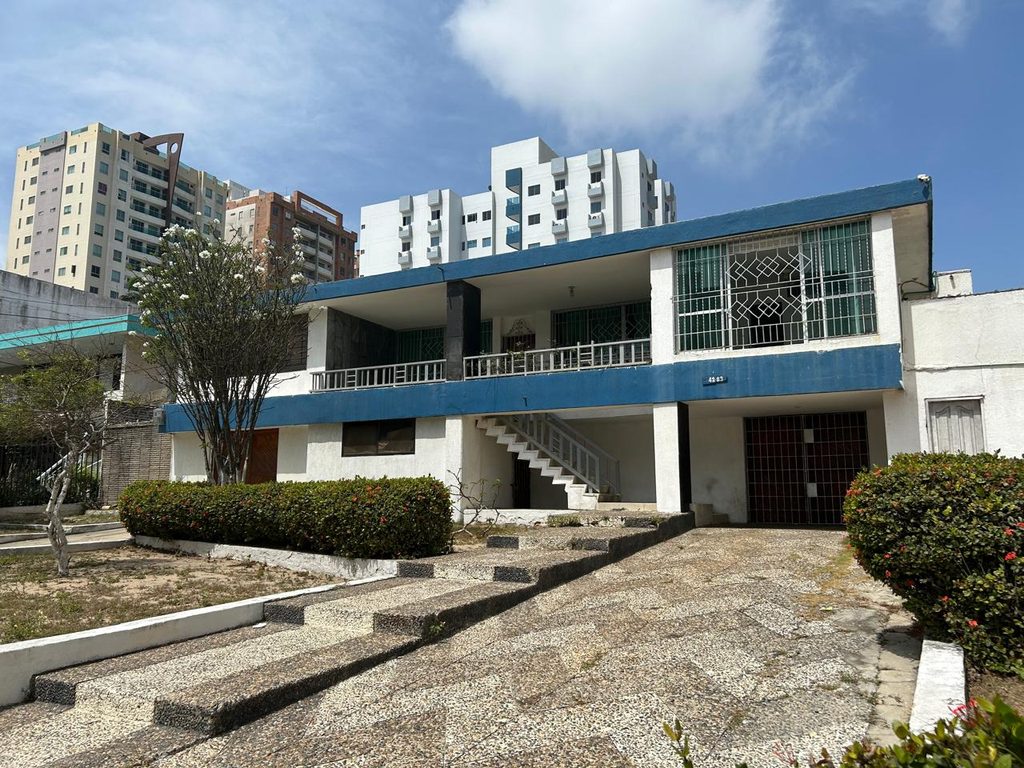
Ciudad Jardin was developed between 1947 and 1962 by Parrish y Cia, the same firm behind El Prado, on about 80 hectares of hilly land in the city's northwest. The model was the low-density garden suburb: large lots, between roughly 450 and 800 square meters, single-family houses set back behind their own gardens, and streets that follow the slope rather than a rigid grid. The American ranch-house style turned up here too, an easy and economical way to build for a growing middle class.
Ciudad Jardin se desarrollo entre 1947 y 1962 por Parrish y Cia, la misma firma detras de El Prado, sobre unas 80 hectareas de terreno con colinas en el noroccidente de la ciudad. El modelo fue el suburbio jardin de baja densidad: lotes grandes, entre unos 450 y 800 metros cuadrados, casas unifamiliares retiradas detras de su propio jardin y calles que siguen la pendiente en lugar de una cuadricula rigida. El estilo de la casa rancho estadounidense tambien aparecio aqui, una forma facil y economica de construir para una clase media en crecimiento.
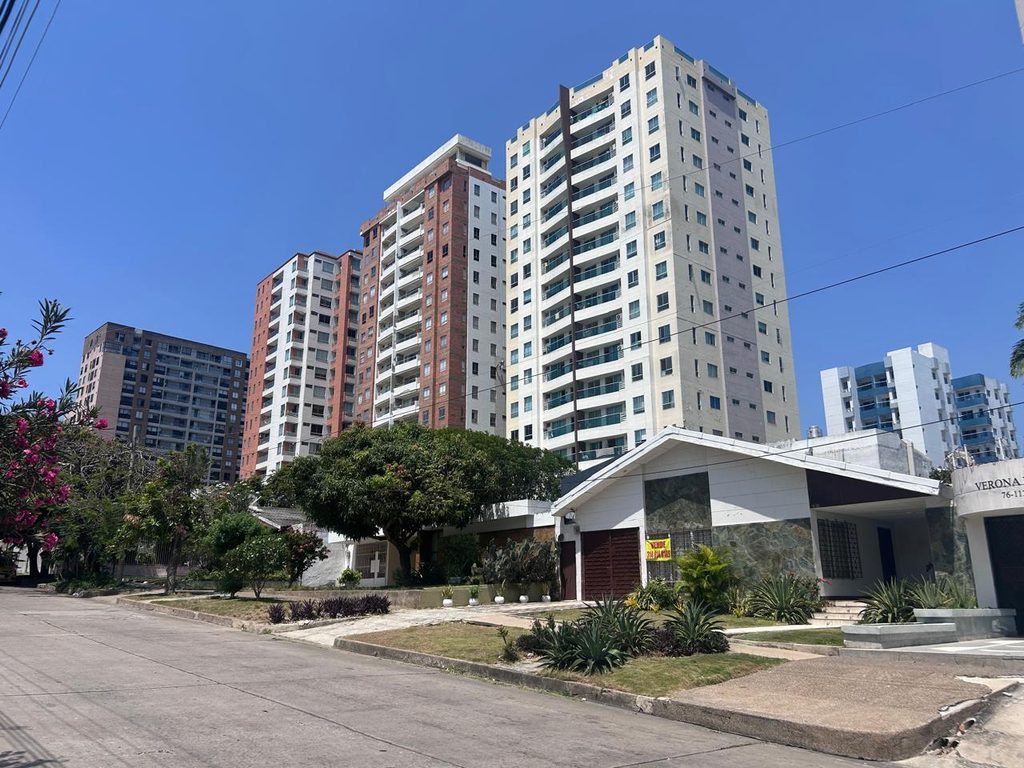
Decades on, some of those original houses have given way to mid-rise apartment buildings, but the bones of the plan survive. The streets are still tree-lined, the homes still have their gardens, and the place keeps a quiet, settled feel that is unusual this close to the center.
Decadas despues, algunas de esas casas originales han dado paso a edificios de mediana altura, pero la estructura del plan sigue en pie. Las calles aun tienen arboles, las casas todavia conservan sus jardines y el barrio mantiene una calma asentada que es poco comun tan cerca del centro.
Mid-century architecture in Ciudad Jardin.Arquitectura de mediados de siglo en Ciudad Jardin.Photo:Foto:Jdvillalobos · CC BY-SA 4.0 · Wikimedia Commons
What's there day to dayQue hay en el dia a dia
Ciudad Jardin is a consolidated sector, which is the local way of saying everything you need is already here. Chain supermarkets, banks, pharmacies, gyms and medical offices sit within a few blocks, and there is an active commercial strip without the strip turning into noise. The Country Club anchors the western edge with its golf course and tennis courts, and the barrio has long been tied to a handful of private schools, which is a big reason families settle here rather than further north.
Ciudad Jardin es un sector consolidado, que es la forma local de decir que todo lo que necesitas ya esta aqui. Supermercados de cadena, bancos, droguerias, gimnasios y consultorios medicos quedan a pocas cuadras, y hay una zona comercial activa sin que esa actividad se vuelva ruido. El Country Club marca el borde occidental con su cancha de golf y sus canchas de tenis, y el barrio lleva mucho tiempo ligado a varios colegios privados, una de las razones por las que las familias se quedan aqui en vez de irse mas al norte.
It is not a nightlife barrio and does not pretend to be. By day there are unhurried cafes that draw a steady crowd of remote workers who would rather not commute to the Zona Norte. If you want the bigger dining picture, see our roundup of the best restaurants in Barranquilla, and for a place to plug in, the best coworking spaces in Barranquilla.
No es un barrio de vida nocturna ni pretende serlo. De dia hay cafes sin afan que atraen a un publico fijo de gente que trabaja remoto y prefiere no desplazarse hasta la Zona Norte. Si quieres el panorama gastronomico completo, mira nuestra seleccion de los mejores restaurantes de Barranquilla, y para un lugar donde conectarte, los mejores espacios de coworking en Barranquilla.
Who lives here, and the costQuien vive aqui y cuanto cuesta
Ciudad Jardin is estrato 4 and 5: a comfortable, mostly Colombian middle class of professionals and families, not a foreigner enclave. That is the appeal for some and the deal-breaker for others. If you want to learn Spanish by living it, this is an easier place to do it than Alto Prado or Villa Country, where more English floats around.
Ciudad Jardin es estrato 4 y 5: una clase media comoda y mayormente colombiana, de profesionales y familias, no un enclave de extranjeros. Eso es el atractivo para algunos y el motivo de descarte para otros. Si quieres aprender espanol viviendolo, este es un lugar mas facil para hacerlo que Alto Prado o Villa Country, donde circula mas ingles.
The value is real. A one-bedroom apartment here runs roughly COP 1,600,000 to 2,600,000 a month (USD $400 to $650 at 4.000:1), and a two or three-bedroom family apartment lands around COP 2,600,000 to 4,000,000 (USD $650 to $1,000). Houses come up less often and run higher, often COP 6,000,000 and up (USD $1,500 and up). For the full picture across the city, see our 2026 cost-of-living breakdown.
El valor es real. Un apartamento de una alcoba aqui cuesta mas o menos COP 1.600.000 a 2.600.000 al mes (USD $400 a $650 a 4.000:1), y uno familiar de dos o tres alcobas ronda los COP 2.600.000 a 4.000.000 (USD $650 a $1.000). Las casas salen al mercado con menos frecuencia y cuestan mas, a menudo desde COP 6.000.000 (USD $1.500 en adelante). Para el panorama completo de la ciudad, mira nuestro desglose del costo de vida 2026.
One thing to plan for before you sign: most landlords here want a local co-signer (codeudor) who owns property in the city, or an insurance-backed guarantee (poliza). On a passport that is harder to arrange than on a cedula, so many foreigners pay several months up front or rent through an agency instead. Our housing and renting guide walks through the workarounds.
Algo que conviene prever antes de firmar: la mayoria de los arrendadores aqui piden un codeudor local con finca raiz en la ciudad, o una poliza de arrendamiento. Con pasaporte eso es mas dificil de conseguir que con cedula, asi que muchos extranjeros pagan varios meses por adelantado o arriendan a traves de una agencia. Nuestra guia de vivienda y arriendo explica las alternativas.
Who Ciudad Jardin is forPara quien es Ciudad Jardin
Ciudad Jardin is for you if:Ciudad Jardin es para ti si:
You are moving with a family and care about schools, calm streets and good value.
You want to live among Colombian neighbors and practice Spanish, not cluster with foreigners.
You work remotely and prize quiet and shade over walkable nightlife.
Te mudas con familia y te importan los colegios, las calles tranquilas y el buen precio.
Quieres vivir entre vecinos colombianos y practicar espanol, no agruparte con extranjeros.
Trabajas remoto y valoras la calma y la sombra mas que la vida nocturna caminable.
Not for you if:No es para ti si:
You want bars and clubs within walking distance on a weeknight.
You need brand-new construction with a full stack of building amenities.
You want to be surrounded by other foreigners and English-language meetups.
Quieres bares y discotecas a pie un dia entre semana.
Necesitas obra nueva con todas las amenidades del edificio.
Quieres estar rodeado de otros extranjeros y de encuentros en ingles.
Ciudad Jardin at a glanceCiudad Jardin de un vistazo
BuiltConstruido
1947 to 1962
BoundariesLimites
Cll 76 to 80Cll 76 a 80
EstratoEstrato
4 to 54 a 5
CharacterCaracter
Quiet, familyTranquilo, familiar
1-BR rentArriendo 1 alcoba
COP 1.6M to 2.6MCOP 1,6M a 2,6M
Still have questions?¿Todavía tienes preguntas?
Catalina is our concierge. Ask her about visas, neighborhoods, healthcare, prices, anything Barranquilla. She answers in chat or WhatsApp, English or Spanish, free.Catalina es nuestra concierge. Pregúntale sobre visas, barrios, salud, precios, cualquier cosa de Barranquilla. Responde por chat o WhatsApp, en inglés o español, gratis.
Specific question while you read? Ask Catalina, the Barranquilla Guide concierge.¿Pregunta específica mientras lees? Pregúntale a Catalina, la concierge de Barranquilla Guide.Chat with Catalina ›Habla con Catalina ›
A mid-century garden barrio in Barranquilla's north-center: shaded streets, single-family houses with gardens, and a settled middle-class calm that costs less than El Prado.
Un barrio jardin de mediados de siglo en el centro-norte de Barranquilla: calles con sombra, casas unifamiliares con jardin y una calma de clase media que cuesta menos que El Prado.
Where Ciudad Jardin sitsDonde queda Ciudad Jardin
Ciudad Jardin sits in the Norte Centro Historico locality, in the central-north of the city, roughly bounded by Calles 76 and 80 and Carreras 42 and 43. It is north of El Prado and west of the older downtown, on land that slopes gently, which is part of why the original planners liked it. The Country Club de Barranquilla, with its 18-hole golf course, borders the area to the west. To see how it lines up against El Prado, Alto Prado and Villa Country, start with our guide to Barranquilla's neighborhoods.
Ciudad Jardin queda en la localidad Norte Centro Historico, en el centro-norte de la ciudad, mas o menos entre las calles 76 y 80 y las carreras 42 y 43. Esta al norte de El Prado y al occidente del centro antiguo, sobre un terreno con leves desniveles, lo que en parte explica por que les gusto a los urbanizadores originales. El Country Club de Barranquilla, con su cancha de golf de 18 hoyos, bordea la zona por el occidente. Para ver como se compara con El Prado, Alto Prado y Villa Country, empieza por nuestra guia de los barrios de Barranquilla.
A garden barrio from the mid-centuryUn barrio jardin de mediados de siglo
Ciudad Jardin was developed between 1947 and 1962 by Parrish y Cia, the same firm behind El Prado, on about 80 hectares of hilly land in the city's northwest. The model was the low-density garden suburb: large lots, between roughly 450 and 800 square meters, single-family houses set back behind their own gardens, and streets that follow the slope rather than a rigid grid. The American ranch-house style turned up here too, an easy and economical way to build for a growing middle class.
Ciudad Jardin se desarrollo entre 1947 y 1962 por Parrish y Cia, la misma firma detras de El Prado, sobre unas 80 hectareas de terreno con colinas en el noroccidente de la ciudad. El modelo fue el suburbio jardin de baja densidad: lotes grandes, entre unos 450 y 800 metros cuadrados, casas unifamiliares retiradas detras de su propio jardin y calles que siguen la pendiente en lugar de una cuadricula rigida. El estilo de la casa rancho estadounidense tambien aparecio aqui, una forma facil y economica de construir para una clase media en crecimiento.
Decades on, some of those original houses have given way to mid-rise apartment buildings, but the bones of the plan survive. The streets are still tree-lined, the homes still have their gardens, and the place keeps a quiet, settled feel that is unusual this close to the center.
Decadas despues, algunas de esas casas originales han dado paso a edificios de mediana altura, pero la estructura del plan sigue en pie. Las calles aun tienen arboles, las casas todavia conservan sus jardines y el barrio mantiene una calma asentada que es poco comun tan cerca del centro.
Mid-century architecture in Ciudad Jardin.Arquitectura de mediados de siglo en Ciudad Jardin.Photo:Foto:Jdvillalobos · CC BY-SA 4.0 · Wikimedia Commons
What's there day to dayQue hay en el dia a dia
Ciudad Jardin is a consolidated sector, which is the local way of saying everything you need is already here. Chain supermarkets, banks, pharmacies, gyms and medical offices sit within a few blocks, and there is an active commercial strip without the strip turning into noise. The Country Club anchors the western edge with its golf course and tennis courts, and the barrio has long been tied to a handful of private schools, which is a big reason families settle here rather than further north.
Ciudad Jardin es un sector consolidado, que es la forma local de decir que todo lo que necesitas ya esta aqui. Supermercados de cadena, bancos, droguerias, gimnasios y consultorios medicos quedan a pocas cuadras, y hay una zona comercial activa sin que esa actividad se vuelva ruido. El Country Club marca el borde occidental con su cancha de golf y sus canchas de tenis, y el barrio lleva mucho tiempo ligado a varios colegios privados, una de las razones por las que las familias se quedan aqui en vez de irse mas al norte.
It is not a nightlife barrio and does not pretend to be. By day there are unhurried cafes that draw a steady crowd of remote workers who would rather not commute to the Zona Norte. If you want the bigger dining picture, see our roundup of the best restaurants in Barranquilla, and for a place to plug in, the best coworking spaces in Barranquilla.
No es un barrio de vida nocturna ni pretende serlo. De dia hay cafes sin afan que atraen a un publico fijo de gente que trabaja remoto y prefiere no desplazarse hasta la Zona Norte. Si quieres el panorama gastronomico completo, mira nuestra seleccion de los mejores restaurantes de Barranquilla, y para un lugar donde conectarte, los mejores espacios de coworking en Barranquilla.
Who lives here, and the costQuien vive aqui y cuanto cuesta
Ciudad Jardin is estrato 4 and 5: a comfortable, mostly Colombian middle class of professionals and families, not a foreigner enclave. That is the appeal for some and the deal-breaker for others. If you want to learn Spanish by living it, this is an easier place to do it than Alto Prado or Villa Country, where more English floats around.
Ciudad Jardin es estrato 4 y 5: una clase media comoda y mayormente colombiana, de profesionales y familias, no un enclave de extranjeros. Eso es el atractivo para algunos y el motivo de descarte para otros. Si quieres aprender espanol viviendolo, este es un lugar mas facil para hacerlo que Alto Prado o Villa Country, donde circula mas ingles.
The value is real. A one-bedroom apartment here runs roughly COP 1,600,000 to 2,600,000 a month (USD $400 to $650 at 4.000:1), and a two or three-bedroom family apartment lands around COP 2,600,000 to 4,000,000 (USD $650 to $1,000). Houses come up less often and run higher, often COP 6,000,000 and up (USD $1,500 and up). For the full picture across the city, see our 2026 cost-of-living breakdown.
El valor es real. Un apartamento de una alcoba aqui cuesta mas o menos COP 1.600.000 a 2.600.000 al mes (USD $400 a $650 a 4.000:1), y uno familiar de dos o tres alcobas ronda los COP 2.600.000 a 4.000.000 (USD $650 a $1.000). Las casas salen al mercado con menos frecuencia y cuestan mas, a menudo desde COP 6.000.000 (USD $1.500 en adelante). Para el panorama completo de la ciudad, mira nuestro desglose del costo de vida 2026.
One thing to plan for before you sign: most landlords here want a local co-signer (codeudor) who owns property in the city, or an insurance-backed guarantee (poliza). On a passport that is harder to arrange than on a cedula, so many foreigners pay several months up front or rent through an agency instead. Our housing and renting guide walks through the workarounds.
Algo que conviene prever antes de firmar: la mayoria de los arrendadores aqui piden un codeudor local con finca raiz en la ciudad, o una poliza de arrendamiento. Con pasaporte eso es mas dificil de conseguir que con cedula, asi que muchos extranjeros pagan varios meses por adelantado o arriendan a traves de una agencia. Nuestra guia de vivienda y arriendo explica las alternativas.
Who Ciudad Jardin is forPara quien es Ciudad Jardin
Ciudad Jardin is for you if:Ciudad Jardin es para ti si:
You are moving with a family and care about schools, calm streets and good value.
You want to live among Colombian neighbors and practice Spanish, not cluster with foreigners.
You work remotely and prize quiet and shade over walkable nightlife.
Te mudas con familia y te importan los colegios, las calles tranquilas y el buen precio.
Quieres vivir entre vecinos colombianos y practicar espanol, no agruparte con extranjeros.
Trabajas remoto y valoras la calma y la sombra mas que la vida nocturna caminable.
Not for you if:No es para ti si:
You want bars and clubs within walking distance on a weeknight.
You need brand-new construction with a full stack of building amenities.
You want to be surrounded by other foreigners and English-language meetups.
Quieres bares y discotecas a pie un dia entre semana.
Necesitas obra nueva con todas las amenidades del edificio.
Quieres estar rodeado de otros extranjeros y de encuentros en ingles.
Ciudad Jardin at a glanceCiudad Jardin de un vistazo
BuiltConstruido
1947 to 1962
BoundariesLimites
Cll 76 to 80Cll 76 a 80
EstratoEstrato
4 to 54 a 5
CharacterCaracter
Quiet, familyTranquilo, familiar
1-BR rentArriendo 1 alcoba
COP 1.6M to 2.6MCOP 1,6M a 2,6M
Still have questions?¿Todavía tienes preguntas?
Catalina is our concierge. Ask her about visas, neighborhoods, healthcare, prices, anything Barranquilla. She answers in chat or WhatsApp, English or Spanish, free.Catalina es nuestra concierge. Pregúntale sobre visas, barrios, salud, precios, cualquier cosa de Barranquilla. Responde por chat o WhatsApp, en inglés o español, gratis.
Get the guide in your inboxRecibe la guía en tu correo
Weekly picks, new guides, and things worth knowing about Barranquilla. No noise, no news feed. Just the useful stuff.Cada semana: recomendaciones, guías nuevas y lo que vale la pena saber de Barranquilla. Sin ruido, sin feed de noticias. Solo lo útil.