Getting Around Barranquilla: Transport Guide (2026)Moverse por Barranquilla: Guía de Transporte (2026)
Mike Chartrand
April 9, 2026, Updated May 2026 · 10 min read
Specific question while you read? Ask Catalina, the Barranquilla Guide concierge.¿Pregunta específica mientras lees? Pregúntale a Catalina, la concierge de Barranquilla Guide.Chat with Catalina ›Habla con Catalina ›
Last updated: May 2026. Barranquilla is a sprawling, traffic-heavy, heat-punishing city. You need a plan to move around it. This guide covers every realistic option: the Transmetro BRT, city buses, rideshares, taxis, walking, driving, and the Ernesto Cortissoz airport (BAQ) transfer, plus what each one actually costs, when to pick it, and the honest trade-offs.
Última actualización: mayo de 2026. Barranquilla es una ciudad extensa, con mucho tráfico y un calor que castiga. Necesitas un plan para moverte. Esta guía cubre todas las opciones reales: el Transmetro (BRT), los buses urbanos, las apps de transporte, los taxis, ir a pie, manejar, y el traslado al aeropuerto Ernesto Cortissoz (BAQ), con lo que cuesta cada una, cuándo conviene y las ventajas y desventajas honestas.
At a glance: what to use whenDe un vistazo: qué usar y cuándo
Short hops within a neighborhood: walk, or 5 to 10 minute Uber. Cross-city (north to Centro, or east to west): Uber, InDriver, or DiDi. 20 to 40 minutes, COP 15 to 35k. Trunk routes along the Murillo/Olaya Herrera corridor: Transmetro BRT. Exploring neighborhoods, slow sightseeing: city bus. Out to Puerto Colombia, Tubará, Juan de Acosta: Uber, private transfer, or rental car. Carnaval week: walking is often fastest; street closures ripple everywhere.
Trayectos cortos dentro de un barrio: a pie, o un Uber de 5 a 10 minutos. De un extremo a otro de la ciudad (del norte al Centro, o de oriente a occidente): Uber, InDriver o DiDi. De 20 a 40 minutos, COP 15.000 a 35.000. Rutas troncales por el corredor Murillo/Olaya Herrera: Transmetro (BRT). Recorrer barrios, paseo sin afán: bus urbano. Salir a Puerto Colombia, Tubará, Juan de Acosta: Uber, traslado privado o carro de alquiler. Semana de Carnaval: muchas veces caminar es lo más rápido; los cierres de calles se sienten por todos lados.
Rideshare: Uber, DiDi, InDriverApps de transporte: Uber, DiDi, InDriver
Rideshare is how most tourists, professionals, and long-term foreign residents move around the city. It’s cheaper than taxis, more transparent, and far safer than hailing cabs on the street.
Las apps de transporte son como se mueve la mayoría de turistas, profesionales y extranjeros que viven aquí. Salen más baratas que los taxis, son más transparentes y mucho más seguras que parar un taxi en la calle.
UberUber
Biggest footprint and most reliable. In Colombia, Uber’s legal status has historically been contested, you’ll see the in-app message that you’re being dispatched a “taxi” rather than a private car in some cases, which is fine. Most Barranquilla Ubers are private drivers in their own cars using the standard UberX experience. Works with US, European, and Colombian credit cards; cash optional.
Es la app con mayor cobertura y la más confiable. En Colombia el estatus legal de Uber ha sido discutido, así que en algunos casos verás un mensaje en la app diciendo que te despachan un “taxi” en vez de un carro particular, lo cual es normal. La mayoría de los Uber en Barranquilla son conductores particulares en sus propios carros usando la experiencia normal de UberX. Acepta tarjetas de crédito de Estados Unidos, Europa y Colombia; el efectivo es opcional.
DiDiDiDi
Chinese-origin rideshare, strong in Latin America. Usually 10 to 20% cheaper than Uber and about as reliable. Some local complaints about price-quote accuracy; set expectations and confirm fare in the app before you hit “Ride.”
App de origen chino, fuerte en América Latina. Suele ser entre 10 y 20 % más barata que Uber y casi igual de confiable. Hay quejas locales sobre la precisión del precio cotizado; confirma la tarifa en la app antes de darle a “Pedir”.
InDriverInDriver
The driver-negotiation model: you propose a fare, drivers accept or counter. Typically the cheapest option, sometimes half the Uber fare for the same trip. Slightly longer wait times and occasional quality issues, but savings are real for short stays where you’re not collecting loyalty points. Works well once you understand the rhythm.
Modelo de negociación con el conductor: tú propones una tarifa y los conductores aceptan o contraofertan. Suele ser la opción más barata, a veces la mitad de lo que cobraría Uber por el mismo recorrido. Los tiempos de espera son un poco más largos y la calidad varía, pero el ahorro es real para estadías cortas donde no estás sumando puntos de lealtad. Funciona bien una vez le agarras el ritmo.
Cabify and BeatCabify y Beat
Smaller players. Cabify has a professional niche in Colombia; Beat is mostly gone from Barranquilla as of 2026. Not a primary choice.
Jugadores más pequeños. Cabify tiene un nicho profesional en Colombia; Beat prácticamente desapareció de Barranquilla en 2026. No son la opción principal.
Typical rideshare faresTarifas típicas en las apps
Inside Alto Prado / El Prado, 1 to 3 km: COP 8 to 15k
Alto Prado ↔ Villa Santos: COP 18 to 30k
Alto Prado ↔ Centro: COP 15 to 25k
Any north-side neighborhood ↔ BAQ airport: COP 30 to 55k
Alto Prado ↔ Puerto Colombia: COP 40 to 70k
Dentro de Alto Prado / El Prado, 1 a 3 km: COP 8.000 a 15.000
Alto Prado ↔ Villa Santos: COP 18.000 a 30.000
Alto Prado ↔ Centro: COP 15.000 a 25.000
Cualquier barrio del norte ↔ aeropuerto BAQ: COP 30.000 a 55.000
Alto Prado ↔ Puerto Colombia: COP 40.000 a 70.000
Surge pricing kicks in during rush hours (7 to 9 AM, 5 to 8 PM), heavy rain, and Carnaval. Expect 1.5 to 2× on worst nights.
La tarifa dinámica sube en horas pico (7 a 9 a. m., 5 a 8 p. m.), con aguaceros fuertes y en Carnaval. En las peores noches espera 1,5 a 2 veces la tarifa normal.
Transmetro (BRT)Transmetro (BRT)
Barranquilla’s bus rapid transit system, operating since 2010. Modeled on Bogotá’s TransMilenio but smaller in scale: two main trunk lines plus a network of feeder buses (alimentadores) that connect outlying neighborhoods to trunk stations.
El sistema de transporte masivo de Barranquilla, en operación desde 2010. Inspirado en TransMilenio de Bogotá pero a menor escala: dos líneas troncales principales más una red de buses alimentadores que conectan los barrios periféricos con las estaciones troncales.
Main corridors: the Calle Murillo trunk runs roughly east-west through the middle of the city; the Olaya Herrera trunk runs from the Centro northward toward Alto Prado and Riomar. If your trip happens to align with one of these corridors, the Transmetro is fast and air-conditioned. For most other trips, a rideshare is faster and the fare difference is small.
Corredores principales: la troncal de la calle Murillo atraviesa la ciudad de oriente a occidente por la mitad; la troncal de la Olaya Herrera va desde el Centro hacia el norte rumbo a Alto Prado y Riomar. Si tu recorrido coincide con uno de estos corredores, el Transmetro es rápido y con aire acondicionado. Para casi todos los demás trayectos, una app de transporte es más rápida y la diferencia de tarifa es pequeña.
How to board: stations are enclosed platforms with turnstiles, just like TransMilenio in Bogotá. You must tap a Transmetro card or a contactless Visa/Mastercard to enter. Boarding on the street mid-route is not possible (unlike city buses). Feeder buses accept the same card; transfers within the system are included in the fare for a limited window.
Cómo abordar: las estaciones son plataformas cerradas con torniquetes, igual que TransMilenio en Bogotá. Tienes que pasar una tarjeta Transmetro o una Visa/Mastercard contactless para entrar. No se puede subir en plena calle a mitad de ruta (a diferencia de los buses urbanos). Los alimentadores aceptan la misma tarjeta; los transbordos dentro del sistema están incluidos en la tarifa por una ventana de tiempo limitada.
Getting a card: buy a rechargeable Transmetro card at any staffed station kiosk (COP 4,000 for the card itself). Load it with COP 10,000 to 20,000 to start. Minimum balance to board is one fare. Top up at station kiosks or through the Transmetro app.
Conseguir la tarjeta: compra una tarjeta Transmetro recargable en cualquier taquilla atendida (COP 4.000 la tarjeta). Cárgala con COP 10.000 a 20.000 para empezar. El saldo mínimo para abordar es el equivalente a un pasaje. Recargas en las taquillas o por la app de Transmetro.
Fares (as of January 2026): COP 3,700 on weekdays / COP 3,800 on Sundays and holidays. No monthly pass exists.
Tarifas (a enero de 2026): COP 3.700 entre semana / COP 3.800 los domingos y festivos. No existe pasaje mensual.
Hours: roughly 5 AM to 10 PM weekdays, slightly shorter on weekends.
Horario: aproximadamente de 5 a. m. a 10 p. m. entre semana, un poco menos los fines de semana.
Practical notes: buses are air-conditioned, which matters enormously in Barranquilla’s heat. Stations are crowded during rush hours (7 to 9 AM, 5 to 8 PM). Keep your phone out of sight on crowded platforms; pickpocketing is the main risk. Official info: transmetro.gov.co. Routes and real-time tracking: Moovit Barranquilla.
Notas prácticas: los buses tienen aire acondicionado, lo cual importa muchísimo con el calor de Barranquilla. Las estaciones se llenan en horas pico (7 a 9 a. m., 5 a 8 p. m.). Mantén el celular fuera de la vista en plataformas llenas; el principal riesgo es el robo al descuido. Información oficial: transmetro.gov.co. Rutas y seguimiento en tiempo real: Moovit Barranquilla.
Say this at the Transmetro kioskDi esto en la taquilla del Transmetro
"Quiero comprar una tarjeta Transmetro y cargarle diez mil pesos, por favor."
I want to buy a Transmetro card and load ten thousand pesos on it, please.
City buses (colectivos)Buses urbanos (colectivos)
The dense network of private city buses is the real public-transit backbone, serving neighborhoods Transmetro doesn’t reach and running more frequently than you’d expect. Fares as of 2026 are COP 3,300 ordinary / COP 3,400 Sundays (unified tariff across all operators, set by the Área Metropolitana). Pay cash when boarding.
La red densa de buses urbanos privados es la verdadera columna vertebral del transporte público: llega a barrios a los que el Transmetro no llega y pasa con más frecuencia de la que esperarías. Las tarifas en 2026 son COP 3.300 ordinaria / COP 3.400 los domingos (tarifa unificada para todos los operadores, fijada por el Área Metropolitana). Se paga en efectivo al subir.
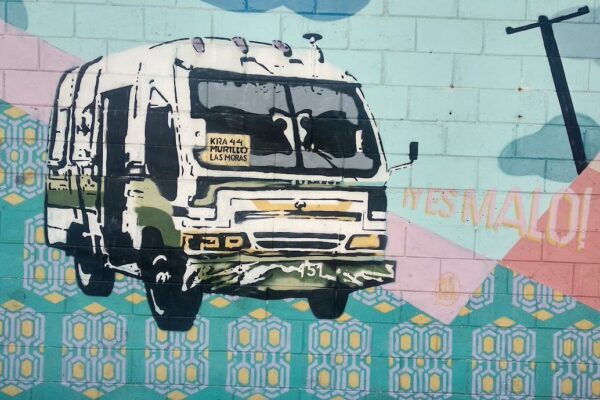
Buses don’t use formal stops; flag one down anywhere along a route, get off by shouting “pare” or “la esquina por favor.” Routes are loosely posted on the windshield. For a visitor, figuring out the right bus takes effort, use Moovit to plan trips.
Los buses no tienen paradas formales; los paras en cualquier parte del recorrido y te bajas gritando “pare” o “la esquina, por favor”. Las rutas vienen anotadas a mano en el parabrisas. Para un visitante, dar con el bus correcto cuesta trabajo; usa Moovit para planear el recorrido.
Best use case for visitors: a dedicated ride-the-bus excursion as a way to see the city. Not a default daily commute option unless you live and work on the same bus line.
Para un visitante, el mejor uso es montarse al bus como excursión para ver la ciudad. No es la opción por defecto para el día a día, a menos que vivas y trabajes sobre la misma ruta.
TaxisTaxis
Registered yellow taxis are everywhere in Barranquilla. They can be cheaper than rideshares but less transparent on price. Rules of thumb:
Los taxis amarillos registrados están por todas partes en Barranquilla. Pueden salir más baratos que las apps, pero son menos transparentes en el precio. Reglas básicas:
Barranquilla taxis have meters but many drivers don’t use them voluntarily. Always ask for the meter: "con taxímetro, por favor." If the driver refuses and quotes a flat fare that seems high, use a rideshare app instead.
Paying in cash is the norm; don’t assume card acceptance.
Short in-neighborhood rides typically cost COP 8,000 to 12,000; longer trips COP 15,000 to 30,000. Airport to north-side neighborhoods: COP 30,000 to 55,000 (same range as rideshare, but negotiated in advance).
After dark, call a radio taxi (dispatched by phone) rather than hailing off the street for added safety.
Los taxis de Barranquilla tienen taxímetro, pero muchos conductores no lo usan por voluntad propia. Siempre pide el taxímetro: “con taxímetro, por favor”. Si el conductor se niega y te dice una tarifa plana que se ve alta, mejor pide por una app.
Lo normal es pagar en efectivo; no asumas que aceptan tarjeta.
Las carreras cortas dentro del barrio cuestan típicamente COP 8.000 a 12.000; los recorridos más largos COP 15.000 a 30.000. Del aeropuerto a los barrios del norte: COP 30.000 a 55.000 (mismo rango que las apps, pero negociado por adelantado).
De noche, llama un radiotaxi (despachado por teléfono) en vez de pararlo en la calle, por seguridad.
Rideshare is usually worth the small premium for built-in safety tracking, a fixed price, and card payment. Use taxis when rideshare surge is bad or you’re in an area with thin driver coverage.
Casi siempre vale la pena pagar un poco más por una app por el rastreo de seguridad integrado, el precio fijo y el pago con tarjeta. Usa taxis cuando la tarifa dinámica de las apps esté muy alta o estés en una zona con pocos conductores.
Say this to a taxi driverDile esto al taxista
"Con taxímetro, por favor. Me va a llevar a [dirección], barrio [nombre del barrio]."
With the meter, please. Take me to [address], [neighborhood] neighborhood.
Say this if the driver quotes an inflated flat rateDile esto si el conductor te dice una tarifa plana inflada
"¿Cuánto es con taxímetro? Si no usa el taxímetro, lo llamo por app."
How much with the meter? If you don’t use the meter, I’ll call an app.
Getting to and from Ernesto Cortissoz airport (BAQ)Cómo llegar y salir del aeropuerto Ernesto Cortissoz (BAQ)
Barranquilla’s airport is Aeropuerto Internacional Ernesto Cortissoz (IATA: BAQ), located in the municipality of Soledad, roughly 7 to 10 km south of the city center. Travel time to north-side neighborhoods (Alto Prado, El Prado, Riomar) is typically 25 to 40 minutes depending on traffic.
El aeropuerto de Barranquilla es el Aeropuerto Internacional Ernesto Cortissoz (IATA: BAQ), en el municipio de Soledad, a unos 7 a 10 km al sur del centro de la ciudad. El tiempo de viaje a los barrios del norte (Alto Prado, El Prado, Riomar) es de 25 a 40 minutos según el tráfico.
Rideshare (recommended): Uber, DiDi, and InDriver all operate from the airport. Exit the arrivals hall, walk to the designated rideshare pickup zone (usually marked outside the building, away from the taxi rank), and request your ride from there. Fares to north-side neighborhoods: COP 30,000 to 55,000.
Apps de transporte (recomendado): Uber, DiDi e InDriver operan desde el aeropuerto. Sal de la zona de llegadas, camina hasta la zona designada para recogida por app (normalmente señalizada afuera del edificio, lejos de la fila de taxis) y pide la carrera desde allí. Tarifas a los barrios del norte: COP 30.000 a 55.000.
Official taxis: registered airport taxis operate from the taxi rank at arrivals. Fares are set by a tariff board; ask the dispatcher for the official rate card before getting in. Expect COP 35,000 to 60,000 to most north-side neighborhoods. Slightly more expensive than rideshare but regulated.
Taxis oficiales: los taxis registrados del aeropuerto salen de la fila de taxis en llegadas. Las tarifas las fija un tablero de tarifas; pídele al despachador el cuadro oficial antes de subir. Espera entre COP 35.000 y 60.000 para la mayoría de los barrios del norte. Un poco más caros que las apps, pero regulados.
City buses and Transmetro: the Transmetro does not currently serve the airport directly. City buses connect Soledad to Centro and beyond, but finding the right route with luggage is confusing and slow. Use rideshare or taxi on arrival.
Buses urbanos y Transmetro: el Transmetro no llega directamente al aeropuerto. Hay buses urbanos que conectan Soledad con el Centro y otros sectores, pero dar con la ruta correcta cargando maletas es confuso y lento. Al llegar, usa una app o taxi.
Renting a car at the airport: several international and national rental agencies have counters in the arrivals area. Useful if you’re planning coastal day trips from the city. See the airport guide for details.
Alquilar carro en el aeropuerto: varias agencias internacionales y nacionales tienen mostradores en el área de llegadas. Útil si vas a hacer paseos de un día por la costa. Mira la guía del aeropuerto para los detalles.
Say this if asking the taxi dispatcher for the official rateDi esto para pedirle al despachador la tarifa oficial
"¿Cuánto es la tarifa oficial para ir a Alto Prado?"
What is the official fare to go to Alto Prado?
Walking and the heat realityCaminar y la realidad del calor
Barranquilla is walkable in pockets, not as a whole. El Prado, Alto Prado, and Villa Country are genuinely pedestrian-friendly: you can spend a whole weekend on foot if you stay in these neighborhoods. Sidewalks are uneven but consistent. The Gran Malecón is the city’s best long walk, 5+ km along the river with cafés, sculpture, and sunset views.
Barranquilla es caminable por sectores, no como ciudad entera. El Prado, Alto Prado y Villa Country sí son amigables con el peatón: puedes pasar un fin de semana entero a pie si te quedas en estos barrios. Los andenes son disparejos pero los hay. El Gran Malecón es la mejor caminata larga de la ciudad, más de 5 km a la orilla del río con cafés, escultura y vistas al atardecer.
Everywhere else is more complicated. Sidewalks disappear, long blocks offer no shade, and distances that look short on a map feel brutal in 34°C-plus humidity. Don’t plan to walk from Alto Prado to the Centro; it’s physically possible but genuinely unpleasant, even for people who consider themselves fit.
El resto es más complicado. Los andenes desaparecen, las cuadras largas no tienen sombra y distancias que en el mapa se ven cortas se vuelven brutales con 34°C y humedad. No planees ir caminando de Alto Prado al Centro; es físicamente posible pero genuinamente incómodo, incluso para gente que se considera en forma.
The heat is not a metaphor. Barranquilla averages 28 to 32°C year-round with high humidity. There is no spring or autumn cool-down. Plan your outdoor movement around the heat:
El calor no es una figura literaria. Barranquilla promedia entre 28 y 32 °C todo el año con humedad alta. No hay primavera ni otoño que refresquen. Planea cualquier movimiento al aire libre pensando en el calor:
Best walking windows: before 9:30 AM or after 6 PM in the dry season (December to April, July to August).
Carry water: always. A 500 ml bottle is a minimum for any walk over 10 minutes.
Shade map: El Prado’s wide, tree-lined streets are the most comfortable pedestrian experience in the city. In Riomar and Villa Santos, shade is sparse.
Heat advisory: if you’re visiting from a temperate country, give yourself 2 to 3 days to acclimatize before walking long distances. Staying hydrated and taking AC breaks matters.
Mejores ventanas para caminar: antes de las 9:30 a. m. o después de las 6 p. m. en temporada seca (diciembre a abril, julio a agosto).
Carga agua: siempre. Una botella de 500 ml es el mínimo para cualquier caminata de más de 10 minutos.
Mapa de sombra: las calles anchas y arborizadas de El Prado son la experiencia peatonal más cómoda de la ciudad. En Riomar y Villa Santos hay poca sombra.
Advertencia por calor: si vienes de un país templado, date 2 a 3 días para aclimatarte antes de caminar distancias largas. Mantenerte hidratado y meterte a sitios con aire acondicionado importa.
CyclingBicicleta
Cycling culture is growing. The Gran Malecón has a dedicated bike lane. Sunday’s Ciclovía closes major avenues to cars for several hours, popular with families. For commuting, the heat and the aggressive driving make daily cycling a committed choice; for recreation it works well.
La cultura ciclista va creciendo. El Gran Malecón tiene una ciclorruta propia. La Ciclovía de los domingos cierra avenidas principales a los carros durante varias horas y es muy concurrida por familias. Para el día a día, el calor y la conducción agresiva hacen que andar en bici a diario sea una decisión comprometida; para la recreación funciona bien.
Rentals: a few shops along the Malecón rent bikes by the hour (~COP 15k/hr). Some hotels in Alto Prado rent too.
Alquileres: hay unas tiendas a lo largo del Malecón que alquilan bicicletas por hora (~COP 15.000/hora). Algunos hoteles de Alto Prado también alquilan.
Driving yourselfManejar tú mismo
We generally don’t recommend renting a car inside the city. Traffic is dense, parking is scarce in the north, motorcycle behavior is unpredictable, and rideshares are cheap enough to make the hassle not worth it.
Por lo general no recomendamos alquilar carro para moverte dentro de la ciudad. El tráfico es denso, en el norte hay poco parqueo, el comportamiento de las motos es impredecible y las apps de transporte son lo suficientemente baratas para que no valga la pena el dolor de cabeza.
A rental makes sense if you’re exploring the coast: day trips to Puerto Colombia, Salgar, Tubará, Juan de Acosta, the Parque Nacional Isla Salamanca, or a longer run to Santa Marta, Minca, Palomino, or Cartagena. Drive on the Vía al Mar (Ruta 90A) north-east toward Santa Marta (~2 hours) or south-west to Cartagena (~2.5 hours including tolls).
Alquilar tiene sentido si vas a recorrer la costa: paseos de un día a Puerto Colombia, Salgar, Tubará, Juan de Acosta, el Parque Nacional Isla Salamanca, o un trayecto más largo a Santa Marta, Minca, Palomino o Cartagena. Tomas la Vía al Mar (Ruta 90A) hacia el nororiente rumbo a Santa Marta (~2 horas) o hacia el suroccidente a Cartagena (~2,5 horas incluyendo peajes).
Practical notes:
Notas prácticas:
An international driving permit (IDP) plus your home license is legally required and occasionally checked.
Gas is moderately priced; credit cards work at most stations.
Barranquilla has a pico y placa (rotating license-plate restriction) for private cars. Rental companies usually give you a car that won’t be affected during your dates, but verify.
Always park in a guarded lot or garage (parqueadero vigilado). Street parking is fine in some neighborhoods, risky in others, and confusing in most.
Un permiso internacional de conducción (PIC) junto con tu licencia de origen es legalmente requerido y de vez en cuando lo piden.
La gasolina tiene un precio moderado; en la mayoría de estaciones aceptan tarjeta.
Barranquilla tiene pico y placa (restricción rotativa de placa) para carros particulares. Las agencias de alquiler suelen darte un carro que no se vea afectado en tus fechas, pero verifícalo.
Siempre parquea en un lote o garaje vigilado (parqueadero vigilado). Parquear en la calle está bien en algunos barrios, es riesgoso en otros y confuso en la mayoría.
Rental counters: Hertz, Avis, National, Budget, Localiza at BAQ and in-city.
Mostradores de alquiler: Hertz, Avis, National, Budget y Localiza en el BAQ y en la ciudad.
Intercity and regionalIntermunicipal y regional
By roadPor carretera
Buses depart from the Terminal de Transportes (Calle 54 #8-103, south of the Centro) for destinations across Colombia. Reliable operators: Berlinas del Fonce, Expreso Brasilia, Rápido Ochoa, Copetran. Typical routes and times:
Los buses salen del Terminal de Transportes (calle 54 #8-103, al sur del Centro) hacia destinos en toda Colombia. Operadores confiables: Berlinas del Fonce, Expreso Brasilia, Rápido Ochoa, Copetran. Rutas y tiempos típicos:
Cartagena: 2 to 2.5 hours, ~COP 30 to 50k
Santa Marta: 2 to 2.5 hours, ~COP 25 to 45k
Palomino (beach town past Santa Marta): 4 hours, ~COP 50 to 75k
Medellín: ~14 hours overnight, ~COP 150 to 220k
Bogotá: ~18 hours overnight, ~COP 180 to 260k
Cartagena: 2 a 2,5 horas, ~COP 30.000 a 50.000
Santa Marta: 2 a 2,5 horas, ~COP 25.000 a 45.000
Palomino (pueblo de playa pasando Santa Marta): 4 horas, ~COP 50.000 a 75.000
Medellín: ~14 horas nocturnas, ~COP 150.000 a 220.000
Bogotá: ~18 horas nocturnas, ~COP 180.000 a 260.000
Bus is dramatically cheaper than flying but the time trade-off is real. For Medellín or Bogotá, fly. For coastal destinations under 3 hours, bus works.
El bus es muchísimo más barato que el avión, pero el costo en tiempo es real. Para Medellín o Bogotá, vuela. Para destinos costeros a menos de 3 horas, el bus funciona.
Private transferTraslado privado
Hotels and tour operators arrange car-with-driver transfers to Cartagena or Santa Marta for COP 400 to 700k one-way for up to 4 passengers. Makes sense for groups or if you have early-morning plans at the destination.
Los hoteles y operadores turísticos organizan traslados de carro con conductor a Cartagena o Santa Marta por COP 400.000 a 700.000 por trayecto, hasta para 4 pasajeros. Tiene sentido para grupos o si tienes planes temprano en la mañana en el destino.
By airPor avión
From BAQ, you can fly to most major Colombian cities. Fastest routing for distant destinations; overkill for Cartagena or Santa Marta. See our airport guide.
Desde BAQ puedes volar a la mayoría de las ciudades grandes de Colombia. Es la opción más rápida para destinos lejanos; excesivo para Cartagena o Santa Marta. Mira nuestra guía del aeropuerto.
Practical tipsTips prácticos
Download apps before you arrive. Uber, DiDi, InDriver, Moovit, and Google Maps all work well in Barranquilla. Maps of Transmetro lines are embedded in Moovit.
Descarga las apps antes de llegar. Uber, DiDi, InDriver, Moovit y Google Maps funcionan bien en Barranquilla. Los mapas de las líneas del Transmetro están integrados en Moovit.
Keep some pesos on you. Buses, some taxis, and many small businesses don’t take cards.
Carga pesos en efectivo. Los buses, algunos taxis y muchos negocios pequeños no aceptan tarjeta.
Traffic windows: worst morning rush 7:15 to 9 AM; worst evening 5:30 to 8 PM. Avoid Calle 84 between the Villa Country mall and Carrera 46 in rush unless you have no choice.
Ventanas de tráfico: la peor hora pico de la mañana es de 7:15 a 9 a. m.; la peor de la tarde, de 5:30 a 8 p. m. Evita la calle 84 entre el centro comercial Villa Country y la carrera 46 en hora pico si puedes.
Pico y placa (license-plate restrictions) affects private cars on weekdays during rush hours, not public transit or rideshare. If renting, check the current calendar at barranquilla.gov.co.
Pico y placa (restricción de placa) afecta a carros particulares entre semana en horas pico, no al transporte público ni a las apps. Si alquilas, revisa el calendario vigente en barranquilla.gov.co.
Rainy season (mid-September to mid-November) produces street flooding in parts of the Centro and southern neighborhoods. Avoid driving during heavy rain; flash flooding (“arroyos“) in Barranquilla can wash cars away, don’t cross a flowing street.
Temporada de lluvias (de mediados de septiembre a mediados de noviembre) produce inundaciones callejeras en partes del Centro y barrios del sur. No manejes con aguacero fuerte; los arroyos de Barranquilla se llevan carros, nunca cruces una calle con agua corriendo.
Carnaval week: street closures around Vía 40 cascade across the north side. Budget extra time for everything, or walk.
Semana de Carnaval: los cierres de calles alrededor de la Vía 40 se desbordan por todo el norte. Calcula tiempo de sobra para todo, o ve caminando.
Further reading on this siteMás lectura en este sitio
Fares and rideshare pricing shift frequently. Transmetro fares are set annually each January. Last full re-verification: May 2026.
Las tarifas y los precios de las apps cambian con frecuencia. Las del Transmetro se fijan cada enero. Última verificación completa: mayo de 2026.
Still have questions?¿Todavía tienes preguntas?
Catalina is our concierge. Ask her about visas, neighborhoods, healthcare, prices, anything Barranquilla. She answers in chat or WhatsApp, English or Spanish, free.Catalina es nuestra concierge. Pregúntale sobre visas, barrios, salud, precios, cualquier cosa de Barranquilla. Responde por chat o WhatsApp, en inglés o español, gratis.
Specific question while you read? Ask Catalina, the Barranquilla Guide concierge.¿Pregunta específica mientras lees? Pregúntale a Catalina, la concierge de Barranquilla Guide.Chat with Catalina ›Habla con Catalina ›
Last updated: May 2026. Barranquilla is a sprawling, traffic-heavy, heat-punishing city. You need a plan to move around it. This guide covers every realistic option: the Transmetro BRT, city buses, rideshares, taxis, walking, driving, and the Ernesto Cortissoz airport (BAQ) transfer, plus what each one actually costs, when to pick it, and the honest trade-offs.
Última actualización: mayo de 2026. Barranquilla es una ciudad extensa, con mucho tráfico y un calor que castiga. Necesitas un plan para moverte. Esta guía cubre todas las opciones reales: el Transmetro (BRT), los buses urbanos, las apps de transporte, los taxis, ir a pie, manejar y el traslado al aeropuerto Ernesto Cortissoz (BAQ), con lo que cuesta cada una, cuándo conviene y las ventajas y desventajas honestas.
At a glance: what to use whenDe un vistazo: qué usar y cuándo
Short hops within a neighborhood: walk, or 5 to 10 minute Uber. Cross-city (north to Centro, or east to west): Uber, InDriver, or DiDi. 20 to 40 minutes, COP 15 to 35k. Trunk routes along the Murillo/Olaya Herrera corridor: Transmetro BRT. Exploring neighborhoods, slow sightseeing: city bus. Out to Puerto Colombia, Tubará, Juan de Acosta: Uber, private transfer, or rental car. Carnaval week: walking is often fastest; street closures ripple everywhere.
Trayectos cortos dentro de un barrio: a pie o un Uber de 5 a 10 minutos. De un extremo a otro de la ciudad (del norte al Centro o de oriente a occidente): Uber, InDriver o DiDi. De 20 a 40 minutos, COP 15.000 a 35.000. Rutas troncales por el corredor Murillo/Olaya Herrera: Transmetro (BRT). Recorrer barrios, paseo sin afán: bus urbano. Salir a Puerto Colombia, Tubará, Juan de Acosta: Uber, traslado privado o carro de alquiler. Semana de Carnaval: muchas veces caminar es lo más rápido; los cierres de calles se sienten por todos lados.
Rideshare: Uber, DiDi, InDriverApps de transporte: Uber, DiDi, InDriver
Rideshare is how most tourists, professionals, and long-term foreign residents move around the city. It's cheaper than taxis, more transparent, and far safer than hailing cabs on the street.
Las apps de transporte son como se mueve la mayoría de turistas, profesionales y extranjeros que viven aquí. Salen más baratas que los taxis, son más transparentes y mucho más seguras que parar un taxi en la calle.
UberUber
Biggest footprint and most reliable. In Colombia, Uber's legal status has historically been contested, you'll see the in-app message that you're being dispatched a "taxi" rather than a private car in some cases, which is fine. Most Barranquilla Ubers are private drivers in their own cars using the standard UberX experience. Works with US, European, and Colombian credit cards; cash optional.
Es la app con mayor cobertura y la más confiable. En Colombia el estatus legal de Uber ha sido discutido, así que en algunos casos verás un mensaje en la app diciendo que te despachan un "taxi" en vez de un carro particular, lo cual es normal. La mayoría de los Uber en Barranquilla son conductores particulares en sus propios carros usando la experiencia normal de UberX. Acepta tarjetas de crédito de Estados Unidos, Europa y Colombia; el efectivo es opcional.
DiDiDiDi
Chinese-origin rideshare, strong in Latin America. Usually 10 to 20% cheaper than Uber and about as reliable. Some local complaints about price-quote accuracy; set expectations and confirm fare in the app before you hit "Ride."
App de origen chino, fuerte en América Latina. Suele ser entre 10 y 20 % más barata que Uber y casi igual de confiable. Hay quejas locales sobre la precisión del precio cotizado; confirma la tarifa en la app antes de darle a "Pedir".
InDriverInDriver
The driver-negotiation model: you propose a fare, drivers accept or counter. Typically the cheapest option, sometimes half the Uber fare for the same trip. Slightly longer wait times and occasional quality issues, but savings are real for short stays where you're not collecting loyalty points. Works well once you understand the rhythm.
Modelo de negociación con el conductor: tú propones una tarifa y los conductores aceptan o contraofertan. Suele ser la opción más barata, a veces la mitad de lo que cobraría Uber por el mismo recorrido. Los tiempos de espera son un poco más largos y la calidad varía, pero el ahorro es real para estadías cortas donde no estás sumando puntos de lealtad. Funciona bien una vez le agarras el ritmo.
Cabify and BeatCabify y Beat
Smaller players. Cabify has a professional niche in Colombia; Beat is mostly gone from Barranquilla as of 2026. Not a primary choice.
Jugadores más pequeños. Cabify tiene un nicho profesional en Colombia; Beat prácticamente desapareció de Barranquilla en 2026. No son la opción principal.
Typical rideshare faresTarifas típicas en las apps
Inside Alto Prado / El Prado, 1 to 3 km: COP 8 to 15k
Alto Prado ↔ Villa Santos: COP 18 to 30k
Alto Prado ↔ Centro: COP 15 to 25k
Any north-side neighborhood ↔ BAQ airport: COP 30 to 55k
Alto Prado ↔ Puerto Colombia: COP 40 to 70k
Dentro de Alto Prado / El Prado, 1 a 3 km: COP 8.000 a 15.000
Alto Prado ↔ Villa Santos: COP 18.000 a 30.000
Alto Prado ↔ Centro: COP 15.000 a 25.000
Cualquier barrio del norte ↔ aeropuerto BAQ: COP 30.000 a 55.000
Alto Prado ↔ Puerto Colombia: COP 40.000 a 70.000
Surge pricing kicks in during rush hours (7 to 9 AM, 5 to 8 PM), heavy rain, and Carnaval. Expect 1.5 to 2× on worst nights.
La tarifa dinámica sube en horas pico (7 a 9 a. m., 5 a 8 p. m.), con aguaceros fuertes y en Carnaval. En las peores noches espera 1,5 a 2 veces la tarifa normal.
Transmetro (BRT)Transmetro (BRT)
Barranquilla's bus rapid transit system, operating since 2010. Modeled on Bogotá's TransMilenio but smaller in scale: two main trunk lines plus a network of feeder buses (alimentadores) that connect outlying neighborhoods to trunk stations.
El sistema de transporte masivo de Barranquilla, en operación desde 2010. Inspirado en TransMilenio de Bogotá pero a menor escala: dos líneas troncales principales más una red de buses alimentadores que conectan los barrios periféricos con las estaciones troncales.
Main corridors: the Calle Murillo trunk runs roughly east-west through the middle of the city; the Olaya Herrera trunk runs from the Centro northward toward Alto Prado and Riomar. If your trip happens to align with one of these corridors, the Transmetro is fast and air-conditioned. For most other trips, a rideshare is faster and the fare difference is small.
Corredores principales: la troncal de la calle Murillo atraviesa la ciudad de oriente a occidente por la mitad; la troncal de la Olaya Herrera va desde el Centro hacia el norte rumbo a Alto Prado y Riomar. Si tu recorrido coincide con uno de estos corredores, el Transmetro es rápido y con aire acondicionado. Para casi todos los demás trayectos, una app de transporte es más rápida y la diferencia de tarifa es pequeña.
How to board: stations are enclosed platforms with turnstiles, just like TransMilenio in Bogotá. You must tap a Transmetro card or a contactless Visa/Mastercard to enter. Boarding on the street mid-route is not possible (unlike city buses). Feeder buses accept the same card; transfers within the system are included in the fare for a limited window.
Cómo abordar: las estaciones son plataformas cerradas con torniquetes, igual que TransMilenio en Bogotá. Tienes que pasar una tarjeta Transmetro o una Visa/Mastercard contactless para entrar. No se puede subir en plena calle a mitad de ruta (a diferencia de los buses urbanos). Los alimentadores aceptan la misma tarjeta; los transbordos dentro del sistema están incluidos en la tarifa por una ventana de tiempo limitada.
Getting a card: buy a rechargeable Transmetro card at any staffed station kiosk (COP 4,000 for the card itself). Load it with COP 10,000 to 20,000 to start. Minimum balance to board is one fare. Top up at station kiosks or through the Transmetro app.
Conseguir la tarjeta: compra una tarjeta Transmetro recargable en cualquier taquilla atendida (COP 4.000 la tarjeta). Cárgala con COP 10.000 a 20.000 para empezar. El saldo mínimo para abordar es el equivalente a un pasaje. Recargas en las taquillas o por la app de Transmetro.
Fares (as of January 2026): COP 3,700 on weekdays / COP 3,800 on Sundays and holidays. No monthly pass exists.
Tarifas (a enero de 2026): COP 3.700 entre semana / COP 3.800 los domingos y festivos. No existe pasaje mensual.
Hours: roughly 5 AM to 10 PM weekdays, slightly shorter on weekends.
Horario: aproximadamente de 5 a. m. a 10 p. m. entre semana, un poco menos los fines de semana.
Practical notes: buses are air-conditioned, which matters enormously in Barranquilla's heat. Stations are crowded during rush hours (7 to 9 AM, 5 to 8 PM). Keep your phone out of sight on crowded platforms; pickpocketing is the main risk. Official info: transmetro.gov.co. Routes and real-time tracking: Moovit Barranquilla.
Notas prácticas: los buses tienen aire acondicionado, lo cual importa muchísimo con el calor de Barranquilla. Las estaciones se llenan en horas pico (7 a 9 a. m., 5 a 8 p. m.). Mantén el celular fuera de la vista en plataformas llenas; el principal riesgo es el robo al descuido. Información oficial: transmetro.gov.co. Rutas y seguimiento en tiempo real: Moovit Barranquilla.
Say this at the Transmetro kioskDi esto en la taquilla del Transmetro
"Quiero comprar una tarjeta Transmetro y cargarle diez mil pesos, por favor."
I want to buy a Transmetro card and load ten thousand pesos on it, please.
City buses (colectivos)Buses urbanos (colectivos)
The dense network of private city buses is the real public-transit backbone, serving neighborhoods Transmetro doesn't reach and running more frequently than you'd expect. Fares as of 2026 are COP 3,300 ordinary / COP 3,400 Sundays (unified tariff across all operators, set by the Área Metropolitana). Pay cash when boarding.
La red densa de buses urbanos privados es la verdadera columna vertebral del transporte público: llega a barrios a los que el Transmetro no llega y pasa con más frecuencia de la que esperarías. Las tarifas en 2026 son COP 3.300 ordinaria / COP 3.400 los domingos (tarifa unificada para todos los operadores, fijada por el Área Metropolitana). Se paga en efectivo al subir.
Buses don't use formal stops; flag one down anywhere along a route, get off by shouting "pare" or "la esquina por favor." Routes are loosely posted on the windshield. For a visitor, figuring out the right bus takes effort, use Moovit to plan trips.
Los buses no tienen paradas formales; los paras en cualquier parte del recorrido y te bajas gritando "pare" o "la esquina, por favor". Las rutas vienen anotadas a mano en el parabrisas. Para un visitante, dar con el bus correcto cuesta trabajo; usa Moovit para planear el recorrido.
Best use case for visitors: a dedicated ride-the-bus excursion as a way to see the city. Not a default daily commute option unless you live and work on the same bus line.
Para un visitante, el mejor uso es montarse al bus como excursión para ver la ciudad. No es la opción por defecto para el día a día, a menos que vivas y trabajes sobre la misma ruta.
TaxisTaxis
Registered yellow taxis are everywhere in Barranquilla. They can be cheaper than rideshares but less transparent on price. Rules of thumb:
Los taxis amarillos registrados están por todas partes en Barranquilla. Pueden salir más baratos que las apps, pero son menos transparentes en el precio. Reglas básicas:
Barranquilla taxis have meters but many drivers don't use them voluntarily. Always ask for the meter: "con taxímetro, por favor." If the driver refuses and quotes a flat fare that seems high, use a rideshare app instead.
Paying in cash is the norm; don't assume card acceptance.
Short in-neighborhood rides typically cost COP 8,000 to 12,000; longer trips COP 15,000 to 30,000. Airport to north-side neighborhoods: COP 30,000 to 55,000 (same range as rideshare, but negotiated in advance).
After dark, call a radio taxi (dispatched by phone) rather than hailing off the street for added safety.
Los taxis de Barranquilla tienen taxímetro, pero muchos conductores no lo usan por voluntad propia. Siempre pide el taxímetro: "con taxímetro, por favor". Si el conductor se niega y te dice una tarifa plana que se ve alta, mejor pide por una app.
Lo normal es pagar en efectivo; no asumas que aceptan tarjeta.
Las carreras cortas dentro del barrio cuestan típicamente COP 8.000 a 12.000; los recorridos más largos COP 15.000 a 30.000. Del aeropuerto a los barrios del norte: COP 30.000 a 55.000 (mismo rango que las apps, pero negociado por adelantado).
De noche, llama un radiotaxi (despachado por teléfono) en vez de pararlo en la calle, por seguridad.
Rideshare is usually worth the small premium for built-in safety tracking, a fixed price, and card payment. Use taxis when rideshare surge is bad or you're in an area with thin driver coverage.
Casi siempre vale la pena pagar un poco más por una app por el rastreo de seguridad integrado, el precio fijo y el pago con tarjeta. Usa taxis cuando la tarifa dinámica de las apps esté muy alta o estés en una zona con pocos conductores.
Say this to a taxi driverDile esto al taxista
"Con taxímetro, por favor. Me va a llevar a [dirección], barrio [nombre del barrio]."
With the meter, please. Take me to [address], [neighborhood] neighborhood.
Say this if the driver quotes an inflated flat rateDile esto si el conductor te dice una tarifa plana inflada
"¿Cuánto es con taxímetro? Si no usa el taxímetro, lo llamo por app."
How much with the meter? If you don't use the meter, I'll call an app.
Getting to and from Ernesto Cortissoz airport (BAQ)Cómo llegar y salir del aeropuerto Ernesto Cortissoz (BAQ)
Barranquilla's airport is Aeropuerto Internacional Ernesto Cortissoz (IATA: BAQ), located in the municipality of Soledad, roughly 7 to 10 km south of the city center. Travel time to north-side neighborhoods (Alto Prado, El Prado, Riomar) is typically 25 to 40 minutes depending on traffic.
El aeropuerto de Barranquilla es el Aeropuerto Internacional Ernesto Cortissoz (IATA: BAQ), en el municipio de Soledad, a unos 7 a 10 km al sur del centro de la ciudad. El tiempo de viaje a los barrios del norte (Alto Prado, El Prado, Riomar) es de 25 a 40 minutos según el tráfico.
Rideshare (recommended): Uber, DiDi, and InDriver all operate from the airport. Exit the arrivals hall, walk to the designated rideshare pickup zone (usually marked outside the building, away from the taxi rank), and request your ride from there. Fares to north-side neighborhoods: COP 30,000 to 55,000.
Apps de transporte (recomendado): Uber, DiDi e InDriver operan desde el aeropuerto. Sal de la zona de llegadas, camina hasta la zona designada para recogida por app (normalmente señalizada afuera del edificio, lejos de la fila de taxis) y pide la carrera desde allí. Tarifas a los barrios del norte: COP 30.000 a 55.000.
Official taxis: registered airport taxis operate from the taxi rank at arrivals. Fares are set by a tariff board; ask the dispatcher for the official rate card before getting in. Expect COP 35,000 to 60,000 to most north-side neighborhoods. Slightly more expensive than rideshare but regulated.
Taxis oficiales: los taxis registrados del aeropuerto salen de la fila de taxis en llegadas. Las tarifas las fija un tablero de tarifas; pídele al despachador el cuadro oficial antes de subir. Espera entre COP 35.000 y 60.000 para la mayoría de los barrios del norte. Un poco más caros que las apps, pero regulados.
City buses and Transmetro: the Transmetro does not currently serve the airport directly. City buses connect Soledad to Centro and beyond, but finding the right route with luggage is confusing and slow. Use rideshare or taxi on arrival.
Buses urbanos y Transmetro: el Transmetro no llega directamente al aeropuerto. Hay buses urbanos que conectan Soledad con el Centro y otros sectores, pero dar con la ruta correcta cargando maletas es confuso y lento. Al llegar, usa una app o taxi.
Renting a car at the airport: several international and national rental agencies have counters in the arrivals area. Useful if you're planning coastal day trips from the city. See the airport guide for details.
Alquilar carro en el aeropuerto: varias agencias internacionales y nacionales tienen mostradores en el área de llegadas. Útil si vas a hacer paseos de un día por la costa. Mira la guía del aeropuerto para los detalles.
Say this if asking the taxi dispatcher for the official rateDi esto para pedirle al despachador la tarifa oficial
"¿Cuánto es la tarifa oficial para ir a Alto Prado?"
What is the official fare to go to Alto Prado?
Walking and the heat realityCaminar y la realidad del calor
Barranquilla is walkable in pockets, not as a whole. El Prado, Alto Prado, and Villa Country are genuinely pedestrian-friendly: you can spend a whole weekend on foot if you stay in these neighborhoods. Sidewalks are uneven but consistent. The Gran Malecón is the city's best long walk, 5+ km along the river with cafés, sculpture, and sunset views.
Barranquilla es caminable por sectores, no como ciudad entera. El Prado, Alto Prado y Villa Country sí son amigables con el peatón: puedes pasar un fin de semana entero a pie si te quedas en estos barrios. Los andenes son disparejos pero los hay. El Gran Malecón es la mejor caminata larga de la ciudad, más de 5 km a la orilla del río con cafés, escultura y vistas al atardecer.
Everywhere else is more complicated. Sidewalks disappear, long blocks offer no shade, and distances that look short on a map feel brutal in 34°C-plus humidity. Don't plan to walk from Alto Prado to the Centro; it's physically possible but genuinely unpleasant, even for people who consider themselves fit.
El resto es más complicado. Los andenes desaparecen, las cuadras largas no tienen sombra y distancias que en el mapa se ven cortas se vuelven brutales con 34°C y humedad. No planees ir caminando de Alto Prado al Centro; es físicamente posible pero genuinamente incómodo, incluso para gente que se considera en forma.
The heat is not a metaphor. Barranquilla averages 28 to 32°C year-round with high humidity. There is no spring or autumn cool-down. Plan your outdoor movement around the heat:
El calor no es una figura literaria. Barranquilla promedia entre 28 y 32 °C todo el año con humedad alta. No hay primavera ni otoño que refresquen. Planea cualquier movimiento al aire libre pensando en el calor:
Best walking windows: before 9:30 AM or after 6 PM in the dry season (December to April, July to August).
Carry water: always. A 500 ml bottle is a minimum for any walk over 10 minutes.
Shade map: El Prado's wide, tree-lined streets are the most comfortable pedestrian experience in the city. In Riomar and Villa Santos, shade is sparse.
Heat advisory: if you're visiting from a temperate country, give yourself 2 to 3 days to acclimatize before walking long distances. Staying hydrated and taking AC breaks matters.
Mejores ventanas para caminar: antes de las 9:30 a. m. o después de las 6 p. m. en temporada seca (diciembre a abril, julio a agosto).
Carga agua: siempre. Una botella de 500 ml es el mínimo para cualquier caminata de más de 10 minutos.
Mapa de sombra: las calles anchas y arborizadas de El Prado son la experiencia peatonal más cómoda de la ciudad. En Riomar y Villa Santos hay poca sombra.
Advertencia por calor: si vienes de un país templado, date 2 a 3 días para aclimatarte antes de caminar distancias largas. Mantenerte hidratado y meterte a sitios con aire acondicionado importa.
CyclingBicicleta
Cycling culture is growing. The Gran Malecón has a dedicated bike lane. Sunday's Ciclovía closes major avenues to cars for several hours, popular with families. For commuting, the heat and the aggressive driving make daily cycling a committed choice; for recreation it works well.
La cultura ciclista va creciendo. El Gran Malecón tiene una ciclorruta propia. La Ciclovía de los domingos cierra avenidas principales a los carros durante varias horas y es muy concurrida por familias. Para el día a día, el calor y la conducción agresiva hacen que andar en bici a diario sea una decisión comprometida; para la recreación funciona bien.
Rentals: a few shops along the Malecón rent bikes by the hour (~COP 15k/hr). Some hotels in Alto Prado rent too.
Alquileres: hay unas tiendas a lo largo del Malecón que alquilan bicicletas por hora (~COP 15.000/hora). Algunos hoteles de Alto Prado también alquilan.
Driving yourselfManejar tú mismo
We generally don't recommend renting a car inside the city. Traffic is dense, parking is scarce in the north, motorcycle behavior is unpredictable, and rideshares are cheap enough to make the hassle not worth it.
Por lo general no recomendamos alquilar carro para moverte dentro de la ciudad. El tráfico es denso, en el norte hay poco parqueo, el comportamiento de las motos es impredecible y las apps de transporte son lo suficientemente baratas para que no valga la pena el dolor de cabeza.
A rental makes sense if you're exploring the coast: day trips to Puerto Colombia, Salgar, Tubará, Juan de Acosta, the Parque Nacional Isla Salamanca, or a longer run to Santa Marta, Minca, Palomino, or Cartagena. Drive on the Vía al Mar (Ruta 90A) north-east toward Santa Marta (~2 hours) or south-west to Cartagena (~2.5 hours including tolls).
Alquilar tiene sentido si vas a recorrer la costa: paseos de un día a Puerto Colombia, Salgar, Tubará, Juan de Acosta, el Parque Nacional Isla Salamanca, o un trayecto más largo a Santa Marta, Minca, Palomino o Cartagena. Tomas la Vía al Mar (Ruta 90A) hacia el nororiente rumbo a Santa Marta (~2 horas) o hacia el suroccidente a Cartagena (~2,5 horas incluyendo peajes).
Practical notes:
Notas prácticas:
An international driving permit (IDP) plus your home license is legally required and occasionally checked.
Gas is moderately priced; credit cards work at most stations.
Barranquilla has a pico y placa (rotating license-plate restriction) for private cars. Rental companies usually give you a car that won't be affected during your dates, but verify.
Always park in a guarded lot or garage (parqueadero vigilado). Street parking is fine in some neighborhoods, risky in others, and confusing in most.
Un permiso internacional de conducción (PIC) junto con tu licencia de origen es legalmente requerido y de vez en cuando lo piden.
La gasolina tiene un precio moderado; en la mayoría de estaciones aceptan tarjeta.
Barranquilla tiene pico y placa (restricción rotativa de placa) para carros particulares. Las agencias de alquiler suelen darte un carro que no se vea afectado en tus fechas, pero verifícalo.
Siempre parquea en un lote o garaje vigilado (parqueadero vigilado). Parquear en la calle está bien en algunos barrios, es riesgoso en otros y confuso en la mayoría.
Rental counters: Hertz, Avis, National, Budget, Localiza at BAQ and in-city.
Mostradores de alquiler: Hertz, Avis, National, Budget y Localiza en el BAQ y en la ciudad.
Intercity and regionalIntermunicipal y regional
By roadPor carretera
Buses depart from the Terminal de Transportes (Calle 54 #8-103, south of the Centro) for destinations across Colombia. Reliable operators: Berlinas del Fonce, Expreso Brasilia, Rápido Ochoa, Copetran. Typical routes and times:
Los buses salen del Terminal de Transportes (calle 54 #8-103, al sur del Centro) hacia destinos en toda Colombia. Operadores confiables: Berlinas del Fonce, Expreso Brasilia, Rápido Ochoa, Copetran. Rutas y tiempos típicos:
Cartagena: 2 to 2.5 hours, ~COP 30 to 50k
Santa Marta: 2 to 2.5 hours, ~COP 25 to 45k
Palomino (beach town past Santa Marta): 4 hours, ~COP 50 to 75k
Medellín: ~14 hours overnight, ~COP 150 to 220k
Bogotá: ~18 hours overnight, ~COP 180 to 260k
Cartagena: 2 a 2,5 horas, ~COP 30.000 a 50.000
Santa Marta: 2 a 2,5 horas, ~COP 25.000 a 45.000
Palomino (pueblo de playa pasando Santa Marta): 4 horas, ~COP 50.000 a 75.000
Medellín: ~14 horas nocturnas, ~COP 150.000 a 220.000
Bogotá: ~18 horas nocturnas, ~COP 180.000 a 260.000
Bus is dramatically cheaper than flying but the time trade-off is real. For Medellín or Bogotá, fly. For coastal destinations under 3 hours, bus works.
El bus es muchísimo más barato que el avión, pero el costo en tiempo es real. Para Medellín o Bogotá, vuela. Para destinos costeros a menos de 3 horas, el bus funciona.
Private transferTraslado privado
Hotels and tour operators arrange car-with-driver transfers to Cartagena or Santa Marta for COP 400 to 700k one-way for up to 4 passengers. Makes sense for groups or if you have early-morning plans at the destination.
Los hoteles y operadores turísticos organizan traslados de carro con conductor a Cartagena o Santa Marta por COP 400.000 a 700.000 por trayecto, hasta para 4 pasajeros. Tiene sentido para grupos o si tienes planes temprano en la mañana en el destino.
By airPor avión
From BAQ, you can fly to most major Colombian cities. Fastest routing for distant destinations; overkill for Cartagena or Santa Marta. See our airport guide.
Desde BAQ puedes volar a la mayoría de las ciudades grandes de Colombia. Es la opción más rápida para destinos lejanos; excesivo para Cartagena o Santa Marta. Mira nuestra guía del aeropuerto.
Practical tipsTips prácticos
Download apps before you arrive. Uber, DiDi, InDriver, Moovit, and Google Maps all work well in Barranquilla. Maps of Transmetro lines are embedded in Moovit.
Descarga las apps antes de llegar. Uber, DiDi, InDriver, Moovit y Google Maps funcionan bien en Barranquilla. Los mapas de las líneas del Transmetro están integrados en Moovit.
Keep some pesos on you. Buses, some taxis, and many small businesses don't take cards.
Carga pesos en efectivo. Los buses, algunos taxis y muchos negocios pequeños no aceptan tarjeta.
Traffic windows: worst morning rush 7:15 to 9 AM; worst evening 5:30 to 8 PM. Avoid Calle 84 between the Villa Country mall and Carrera 46 in rush unless you have no choice.
Ventanas de tráfico: la peor hora pico de la mañana es de 7:15 a 9 a. m.; la peor de la tarde, de 5:30 a 8 p. m. Evita la calle 84 entre el centro comercial Villa Country y la carrera 46 en hora pico si puedes.
Pico y placa (license-plate restrictions) affects private cars on weekdays during rush hours, not public transit or rideshare. If renting, check the current calendar at barranquilla.gov.co.
Pico y placa (restricción de placa) afecta a carros particulares entre semana en horas pico, no al transporte público ni a las apps. Si alquilas, revisa el calendario vigente en barranquilla.gov.co.
Rainy season (mid-September to mid-November) produces street flooding in parts of the Centro and southern neighborhoods. Avoid driving during heavy rain; flash flooding ("arroyos") in Barranquilla can wash cars away, don't cross a flowing street.
Temporada de lluvias (de mediados de septiembre a mediados de noviembre) produce inundaciones callejeras en partes del Centro y barrios del sur. No manejes con aguacero fuerte; los arroyos de Barranquilla se llevan carros, nunca cruces una calle con agua corriendo.
Carnaval week: street closures around Vía 40 cascade across the north side. Budget extra time for everything, or walk.
Semana de Carnaval: los cierres de calles alrededor de la Vía 40 se desbordan por todo el norte. Calcula tiempo de sobra para todo, o ve caminando.
Further reading on this siteMás lectura en este sitio
Fares and rideshare pricing shift frequently. Transmetro fares are set annually each January. Last full re-verification: May 2026.
Las tarifas y los precios de las apps cambian con frecuencia. Las del Transmetro se fijan cada enero. Última verificación completa: mayo de 2026.
Still have questions?¿Todavía tienes preguntas?
Catalina is our concierge. Ask her about visas, neighborhoods, healthcare, prices, anything Barranquilla. She answers in chat or WhatsApp, English or Spanish, free.Catalina es nuestra concierge. Pregúntale sobre visas, barrios, salud, precios, cualquier cosa de Barranquilla. Responde por chat o WhatsApp, en inglés o español, gratis.
Get the guide in your inboxRecibe la guía en tu correo
Weekly picks, new guides, and things worth knowing about Barranquilla. No noise, no news feed. Just the useful stuff.Cada semana: recomendaciones, guías nuevas y lo que vale la pena saber de Barranquilla. Sin ruido, sin feed de noticias. Solo lo útil.