Specific question while you read? Ask Catalina, the Barranquilla Guide concierge.¿Pregunta específica mientras lees? Pregúntale a Catalina, la concierge de Barranquilla Guide.Chat with Catalina ›Habla con Catalina ›
Barranquilla’s first planned neighborhood: a 1920 garden suburb of neoclassical mansions, mango trees, and the streets where the modern Colombian Caribbean was imagined into being.
El primer barrio planificado de Colombia: un suburbio jardín de 1920, de mansiones neoclásicas, palos de mango y las calles donde se imaginó el Caribe colombiano moderno.
Where El Prado sitsDónde queda El Prado
El Prado is a compact rectangle just east of the old downtown, running roughly between Carrera 50 and Carrera 60 and between Calle 53 and Calle 75. Its spine is Carrera 54, a wide avenue with a planted median, and it has a second tree-lined boulevard along Carrera 58. At the center sits the Parque de los Fundadores, where a bronze eagle marks the city’s aviation pioneers. One of the first biplane flights in Colombia took off from this land back in 1912, before any of the houses existed. To see how El Prado fits against Alto Prado, Villa Country and the newer northern barrios, start with our guide to Barranquilla’s neighborhoods.
El Prado es un rectángulo compacto justo al oriente del centro antiguo, entre las carreras 50 y 60 y entre las calles 53 y 75. Su eje es la carrera 54, una avenida amplia con separador arborizado, y tiene un segundo bulevar lleno de árboles sobre la carrera 58. En el centro está el Parque de los Fundadores, donde un águila de bronce recuerda a los pioneros de la aviación de la ciudad. Uno de los primeros vuelos en biplano de Colombia despegó de estos terrenos en 1912, antes de que existiera ninguna de las casas. Para ver cómo se compara El Prado con Alto Prado, Villa Country y los barrios más nuevos del norte, empieza por nuestra guía de los barrios de Barranquilla.
Colombia’s first planned neighborhoodEl primer barrio planificado de Colombia
The land was a cattle farm before it was an address. In 1900 it was bought as grazing ground and named El Prado; in 1904 it passed to a barranquillero named Manuel J. De La Rosa. In 1918 De La Rosa met Karl C. Parrish, an American developer who looked at the dusty lots east of town and saw a neighborhood of “chosen residences with wide gardens and modern comforts.” Parrish and two partners bought the land for 65,000 pesos in American gold, pushed the permits through the city council, and in 1920 began selling lots in what became Colombia’s first fully planned urban development.
La tierra fue una finca ganadera antes de ser una dirección. En 1900 se compró como potrero y se le llamó El Prado; en 1904 pasó a manos de un barranquillero, Manuel J. De La Rosa. En 1918 De La Rosa conoció a Karl C. Parrish, un urbanizador estadounidense que miró los lotes polvorientos al oriente de la ciudad y vio un barrio de “residencias escogidas, con amplios jardines y comodidades modernas”. Parrish y dos socios compraron el terreno por 65.000 pesos en oro americano, tramitaron los permisos ante el Concejo Municipal y en 1920 empezaron a vender lotes en lo que se convirtió en el primer desarrollo urbano totalmente planificado de Colombia.
The blueprint came from abroad. Parrish borrowed from the garden-city movement that Ebenezer Howard had set out in England in 1903, and from the leafy American suburbs of the era. He hired Ray Wyrick, a US parks-and-subdivision engineer, to lay out the streets and drainage according to the land’s slope and the direction of the prevailing winds, so the sea and river breezes would move through the blocks. The result was something Barranquilla had never seen: wide paved streets, generous front gardens, real green space, and houses set back behind a single building line.
El plano vino de afuera. Parrish se inspiró en el movimiento de la ciudad jardín que Ebenezer Howard había planteado en Inglaterra en 1903 y en los frondosos suburbios estadounidenses de la época. Contrató a Ray Wyrick, un ingeniero de parques y urbanizaciones de Estados Unidos, para trazar las calles y los drenajes según la pendiente del terreno y la dirección de los vientos, de modo que las brisas del mar y del río corrieran entre las manzanas. El resultado fue algo que Barranquilla nunca había visto: calles anchas y pavimentadas, antejardines generosos, verdaderas zonas verdes y casas retiradas detrás de una sola línea de construcción.
Parrish ran it like a private city. His building code banned the rural materials the rest of town was made from, no bahareque, no zinc, no palm thatch, and forbade keeping livestock in the patios. Parrish y Cía pioneered a “technical urbanization system” that the rest of the country, Bogotá included, would not adopt until after 1940. El Prado was the moment Barranquilla decided to stop being a river town and start being a modern city.
Parrish lo manejó como una ciudad privada. Su reglamento de construcción prohibió los materiales rurales con que estaba hecho el resto de la ciudad, nada de bahareque, ni zinc, ni techos de palma, y prohibió criar animales en los patios. Parrish y Cía fue pionera de un “sistema técnico de urbanización” que el resto del país, Bogotá incluida, solo adoptaría después de 1940. El Prado fue el momento en que Barranquilla decidió dejar de ser un pueblo de río para volverse una ciudad moderna.
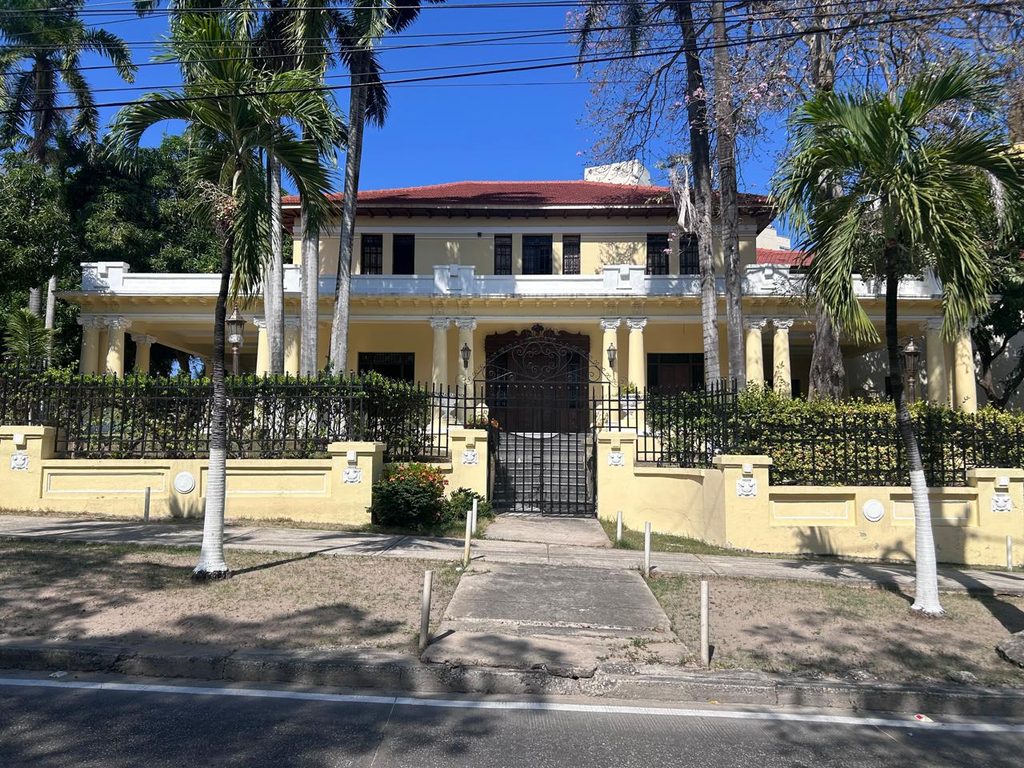
Carrera 54, the neighborhood’s central boulevard, still shaded a century on.La carrera 54, el bulevar central del barrio, aún con sombra un siglo después.Photo:Foto:Jdvillalobos · CC BY 3.0 · Wikimedia Commons
An open-air architecture museumUn museo de arquitectura al aire libre
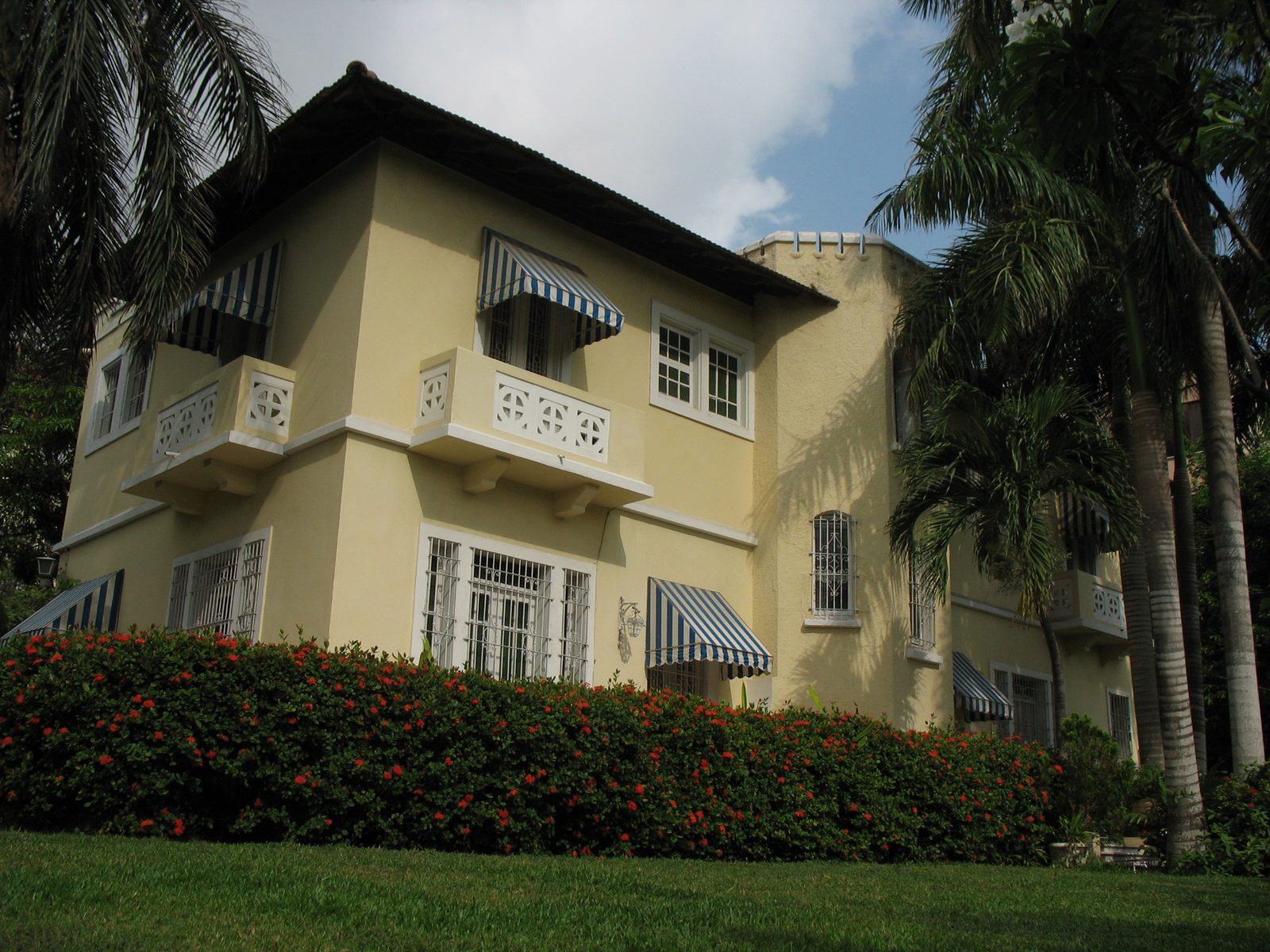
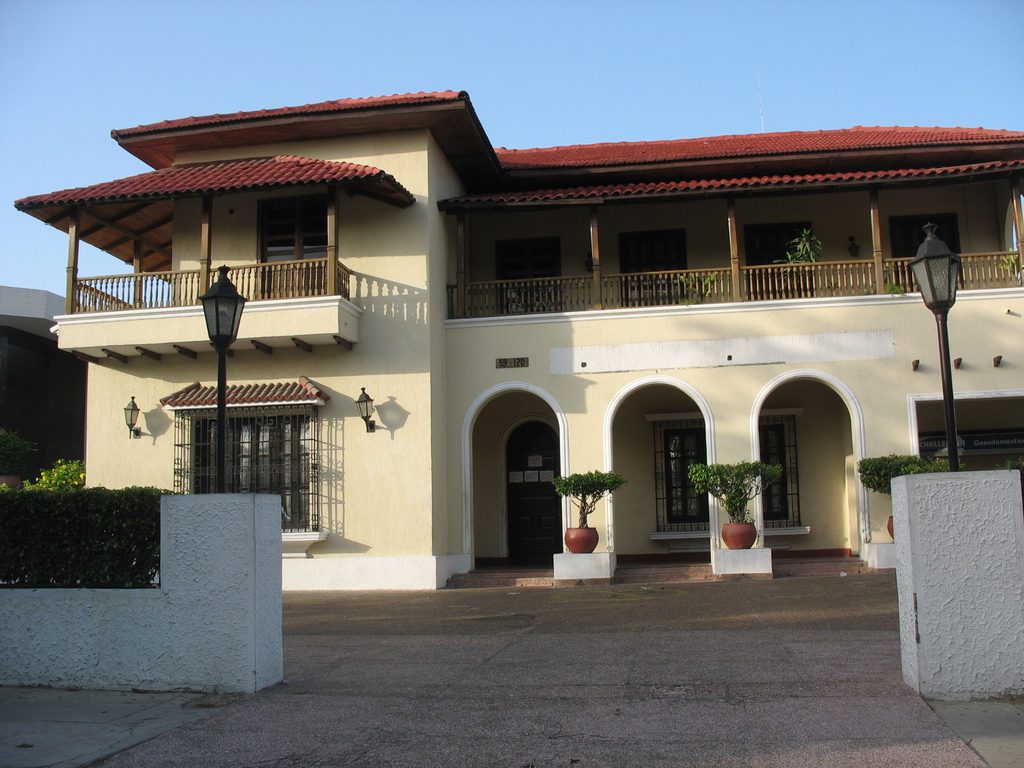
More than fifty mansions went up inside the original grid, and because Parrish let each buyer build to their own taste within his rules, no two are quite alike. The dominant notes are neoclassical and neo-Mediterranean, but walk a single block and you will pass Art Deco beside Moorish arches beside a strict 1950s modernist box. They share the same grammar: deep front gardens (antejardines), terraces, columns, and air gaps between properties for ventilation.
Más de cincuenta mansiones se levantaron dentro de la cuadrícula original y, como Parrish dejó que cada comprador construyera a su gusto dentro de sus reglas, no hay dos iguales. Predominan el neoclásico y el neomediterráneo, pero en una sola cuadra pasas del Art Déco a los arcos moriscos y a una caja modernista de los años cincuenta. Comparten la misma gramática: antejardines profundos, terrazas, columnas y cajas de aire entre las casas para ventilar.
The landmarks are stitched into ordinary streets. The Iglesia de Nuestra Señora de la Inmaculada Concepción and the Colegio Nuestra Señora de Lourdes anchor the skyline; the Sinagoga Shaare Sedek is a reminder of the Jewish and Levantine merchant families who helped build the city; a statue of Santander watches over one of the boulevards.
Los hitos están cosidos a las calles cotidianas. La Iglesia de Nuestra Señora de la Inmaculada Concepción y el Colegio Nuestra Señora de Lourdes marcan el perfil del barrio; la Sinagoga Shaare Sedek recuerda a las familias comerciantes judías y del Levante que ayudaron a construir la ciudad; una estatua de Santander vigila uno de los bulevares.
The old Mancini house, one of El Prado’s restored villas.La antigua casa Mancini, una de las quintas restauradas de El Prado.Photo:Foto:Jdvillalobos · CC BY-SA 4.0 · Wikimedia Commons
All of it is protected. The Colombian government declared the barrio a Bien de Interés Cultural of national rank in 2005 (the Hotel El Prado itself earned the same status in 2004). Inside the perimeter you cannot demolish a heritage house, raise a building above its original silhouette, or take down a mature tree without permission. That is why, a hundred years on, El Prado still reads as a single, coherent idea.
Todo está protegido. El Estado colombiano declaró el barrio Bien de Interés Cultural de orden nacional en 2005 (el propio Hotel El Prado obtuvo esa misma categoría en 2004). Dentro del perímetro no se puede demoler una casa patrimonial, subir un edificio por encima de su silueta original ni tumbar un árbol maduro sin permiso. Por eso, cien años después, El Prado todavía se lee como una sola idea coherente.
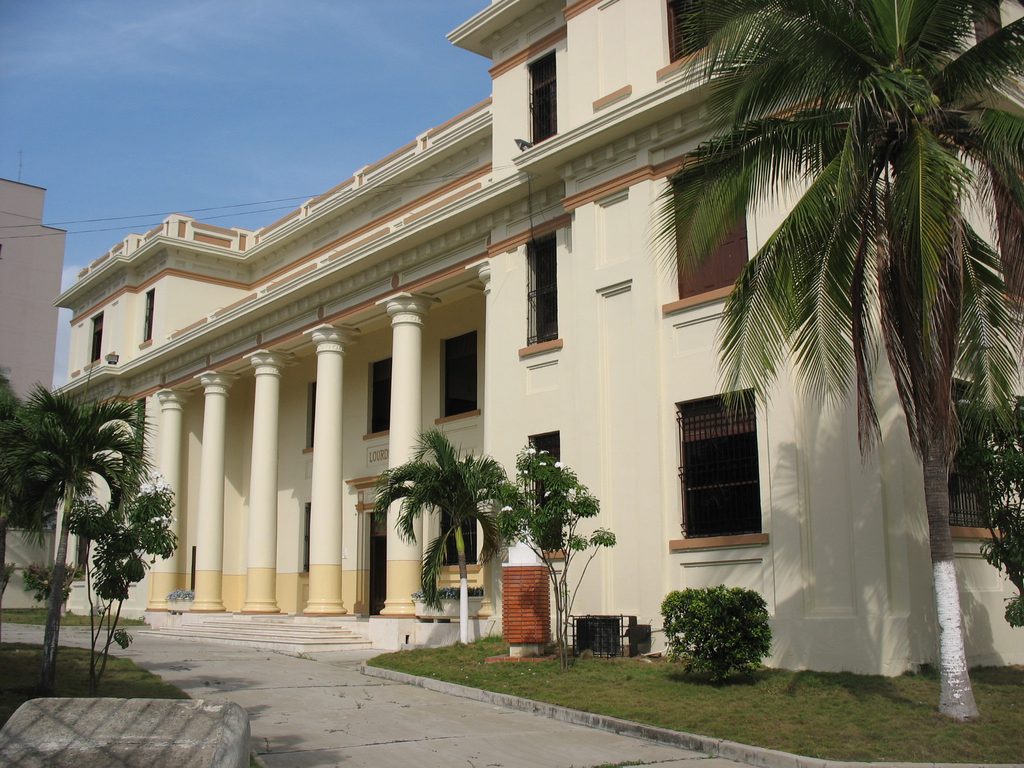
The Colegio Nuestra Señora de Lourdes, one of the barrio’s landmark buildings.El Colegio Nuestra Señora de Lourdes, uno de los edificios emblemáticos del barrio.Photo:Foto:Jdvillalobos · CC BY 3.0 · Wikimedia Commons
Hotel El Prado, the grande dameHotel El Prado, la gran dama
If the neighborhood has a heart, it is the Hotel El Prado. The Parrish and Obregón families built it together, the American architect Burdette Higgins drew it in a Spanish late-Baroque style, all whitewashed stucco, clay-tile roofs and tropical gardens, and after three years of work it opened in 1930 with President Enrique Olaya Herrera at the head table. It is widely called the first hotel in Latin America built for tourism, the first with a private bathroom in every room, and the first with a semi-Olympic pool.
Si el barrio tiene un corazón, es el Hotel El Prado. Lo construyeron juntas las familias Parrish y Obregón, el arquitecto estadounidense Burdette Higgins lo dibujó en un estilo barroco tardío español, todo de estuco blanco, tejas de barro y jardines tropicales, y tras tres años de obra abrió en 1930 con el presidente Enrique Olaya Herrera en la mesa principal. Se le considera el primer hotel de América Latina construido para el turismo, el primero con baño privado en cada habitación y el primero con piscina semiolímpica.
It did not stay golden. By the 1980s and 1990s the hotel had become a money-laundering and trafficking front tied to the Cartel de la Costa, and the state eventually seized it through asset forfeiture. It survived all of it. Today the Hotel El Prado is open and restored, its courtyard and palm-ringed pool intact, and during Carnaval its grand salon still fills with live salsa and tropical music.
No siempre brilló. En los años ochenta y noventa el hotel se convirtió en una fachada de lavado de activos y narcotráfico ligada al Cartel de la Costa, y al final el Estado lo asumió por extinción de dominio. Sobrevivió a todo eso. Hoy el Hotel El Prado está abierto y restaurado, con su patio y su piscina rodeada de palmas intactos, y en Carnaval su gran salón todavía se llena de salsa y música tropical en vivo.
The Hotel El Prado, opened in 1930 and still the barrio’s landmark.El Hotel El Prado, inaugurado en 1930 y aún el emblema del barrio.Photo:Foto:Jdvillalobos · CC BY-SA 4.0 · Wikimedia Commons
Where the Caribbean’s culture got writtenDonde se escribió la cultura del Caribe
El Prado was never only houses. In the mid-twentieth century the area became the workshop of the Grupo de Barranquilla, the circle that pulled Colombian letters toward the coast. Its members were the novelist Álvaro Cepeda Samudio, the journalists Alfonso Fuenmayor and Germán Vargas, the painters Alejandro Obregón and Enrique Grau, the photographer Nereo López, and, before he was famous, a young reporter named Gabriel García Márquez, all of them orbiting the Catalan bookseller Ramón Vinyes, the “wise Catalan” who would later turn up in One Hundred Years of Solitude.
El Prado nunca fue solo casas. A mediados del siglo XX la zona se volvió el taller del Grupo de Barranquilla, el círculo que jaló las letras colombianas hacia la costa. Lo integraban el novelista Álvaro Cepeda Samudio, los periodistas Alfonso Fuenmayor y Germán Vargas, los pintores Alejandro Obregón y Enrique Grau, el fotógrafo Nereo López y, antes de ser famoso, un joven reportero llamado Gabriel García Márquez, todos en torno al librero catalán Ramón Vinyes, el “sabio catalán” que después aparecería en Cien años de soledad.
Their clubhouse was La Cueva, an old hunters’ bar that opened in 1954 a few blocks west of El Prado and filled, by the late fifties, with writers and painters arguing until dawn. It closed in 1969 and reopened decades later as a foundation: part restaurant and bar, part gallery and concert room, still hung with Obregón’s work. It is one of the few literary landmarks in Colombia you can actually sit down inside. Our El Prado walking tour traces these streets on foot, and if you want the literary angle specifically, you can book a guided Gabriel García Márquez literary tour on Viator.
Photo via Viator
Su sede era La Cueva, un viejo bar de cazadores que abrió en 1954 a pocas cuadras al occidente de El Prado y que, a finales de los cincuenta, se llenaba de escritores y pintores discutiendo hasta el amanecer. Cerró en 1969 y reabrió décadas después como fundación: mitad restaurante y bar, mitad galería y sala de conciertos, todavía con obras de Obregón colgadas. Es uno de los pocos hitos literarios de Colombia donde de verdad te puedes sentar. Nuestro recorrido a pie por El Prado sigue estas calles, y si quieres el enfoque literario específicamente, puedes reservar un tour literario guiado sobre Gabriel García Márquez en Viator.
Foto vía Viator
What makes El Prado special todayQué hace especial a El Prado hoy
What makes El Prado worth your time now is the second life its mansions are having. Old villas have reopened as restaurants, cafés, design studios and small hotels, one restoration at a time. The standout is Manuel (Carrera 55 #74-125), chef Manuel Mendoza’s tasting-menu room set inside a converted house and named among Latin America’s 50 Best Restaurants. For the wider scene, see our guide to the best restaurants in Barranquilla, the eat and drink section, and where to go after dark in our nightlife guide. If you'd rather see the cafés and mansions with a guide, there is also a private walking tour of El Prado with coffee tasting on Viator.
Photo via Viator
Lo que hace que El Prado valga la pena hoy es la segunda vida de sus mansiones. Viejas quintas han reabierto como restaurantes, cafés, estudios de diseño y hoteles pequeños, una restauración a la vez. El más destacado es Manuel (carrera 55 #74-125), el restaurante de menú degustación del chef Manuel Mendoza, montado dentro de una casa adaptada y reconocido entre los 50 Mejores Restaurantes de América Latina. Para el panorama completo, mira nuestra guía de los mejores restaurantes de Barranquilla, la sección de comer y beber y a dónde ir de noche en nuestra guía de vida nocturna. Si prefieres ver los cafés y las mansiones con un guía, también hay un tour privado a pie por El Prado con degustación de café en Viator.
Foto vía Viator
The deeper appeal is simpler. You can do all of this on foot, under a full tree canopy, on sidewalks that actually exist, past buildings made to be looked at. That is not a sentence you can write about much of the rest of Barranquilla, and it is the single best reason to spend an afternoon, or a lease, in El Prado.
El atractivo de fondo es más sencillo. Puedes hacer todo esto a pie, bajo una bóveda de árboles, por andenes que de verdad existen, frente a edificios hechos para mirarse. Eso no se puede decir de gran parte del resto de Barranquilla, y es la mejor razón para pasar una tarde, o firmar un arriendo, en El Prado.
Living in El PradoVivir en El Prado
El Prado is estrato 5 and 6, comfortably upper-middle-class, and central in a way the newer northern barrios are not. Rents have climbed as restoration spread, but they are still reasonable for the character. A one-bedroom in a converted mansion runs around COP 1,800,000 to 2,800,000 a month (USD $450 to $700 at 4.000:1), and two-bedrooms land between COP 2,600,000 and 4,400,000 (USD $650 to $1,100). For the full picture, see our cost-of-living breakdown.
El Prado es estrato 5 y 6, una clase media alta cómoda, y central de un modo que los barrios más nuevos del norte no lo son. Los arriendos han subido a medida que avanzó la restauración, pero siguen siendo razonables para el carácter que ofrecen. Un apartamento de una alcoba en una mansión adaptada cuesta unos COP 1.800.000 a 2.800.000 al mes (USD $450 a $700 a 4.000:1), y los de dos alcobas van entre COP 2.600.000 y 4.400.000 (USD $650 a $1.100). Para el panorama completo, mira nuestro desglose del costo de vida.
One thing to plan for: most landlords here want a local co-signer (codeudor) who owns property in the city, or an insurance-backed guarantee (póliza). On a passport that is harder to arrange than on a cédula, so many foreigners pay several months up front or rent through an agency instead. Our housing guide covers the workarounds, and if you are weighing a move, the visa guide covers residency. Remote workers will find the walkability rare and useful: pair it with our coworking and remote-work guides.
Algo que conviene prever: la mayoría de los arrendadores aquí piden un codeudor local con finca raíz en la ciudad, o una póliza de arrendamiento. Con pasaporte eso es más difícil de conseguir que con cédula, así que muchos extranjeros pagan varios meses por adelantado o arriendan a través de una agencia. Nuestra guía de vivienda explica las alternativas y, si estás pensando en mudarte, la guía de visas cubre la residencia. Quien trabaja remoto valorará lo caminable que es: combínalo con nuestras guías de coworking y trabajo remoto.
El Prado is for you if:El Prado es para ti si:
You want character and history over new concrete towers.
You are a remote worker who will pay a little more for walkability and shade.
You care about architecture, the Caribbean early twentieth century, and being able to walk to dinner.
Quieres carácter e historia más que torres de concreto nuevas.
Trabajas remoto y pagarías un poco más por poder caminar y por la sombra.
Te importan la arquitectura, el Caribe de principios del siglo XX y poder ir caminando a cenar.
Not for you if:No es para ti si:
You need a new build with a gym, pool and a stack of amenities.
You want to be next to the glass towers and malls of the Zona Norte.
You have no patience for the quirks of living in a hundred-year-old building.
Necesitas obra nueva con gimnasio, piscina y un montón de amenidades.
Quieres estar al lado de las torres de vidrio y los centros comerciales de la Zona Norte.
No tienes paciencia para las mañas de vivir en un edificio de cien años.
El Prado at a glanceEl Prado de un vistazo
FoundedFundado
1920
BoundariesLímites
Cra 50 to 60Cra 50 a 60
EstratoEstrato
5 to 65 a 6
Heritage statusPatrimonio
National (2005)Nacional (2005)
1-BR rentArriendo 1 alcoba
COP 1.8M to 2.8MCOP 1,8M a 2,8M
Still have questions?¿Todavía tienes preguntas?
Catalina is our concierge. Ask her about visas, neighborhoods, healthcare, prices, anything Barranquilla. She answers in chat or WhatsApp, English or Spanish, free.Catalina es nuestra concierge. Pregúntale sobre visas, barrios, salud, precios, cualquier cosa de Barranquilla. Responde por chat o WhatsApp, en inglés o español, gratis.
Specific question while you read? Ask Catalina, the Barranquilla Guide concierge.¿Pregunta específica mientras lees? Pregúntale a Catalina, la concierge de Barranquilla Guide.Chat with Catalina ›Habla con Catalina ›
Barranquilla's first planned neighborhood: a 1920 garden suburb of neoclassical mansions, mango trees, and the streets where the modern Colombian Caribbean was imagined into being.
El primer barrio planificado de Barranquilla: un suburbio jardín de 1920, de mansiones neoclásicas, palos de mango y las calles donde se imaginó el Caribe colombiano moderno.
Where El Prado sitsDónde queda El Prado
El Prado is a compact rectangle just east of the old downtown, running roughly between Carrera 50 and Carrera 60 and between Calle 53 and Calle 75. Its spine is Carrera 54, a wide avenue with a planted median, and it has a second tree-lined boulevard along Carrera 58. At the center sits the Parque de los Fundadores, where a bronze eagle marks the city's aviation pioneers. One of the first biplane flights in Colombia took off from this land back in 1912, before any of the houses existed. To see how El Prado fits against Alto Prado, Villa Country and the newer northern barrios, start with our guide to Barranquilla's neighborhoods.
El Prado es un rectángulo compacto justo al oriente del centro antiguo, entre las carreras 50 y 60 y entre las calles 53 y 75. Su eje es la carrera 54, una avenida amplia con separador arborizado, y tiene un segundo bulevar lleno de árboles sobre la carrera 58. En el centro está el Parque de los Fundadores, donde un águila de bronce recuerda a los pioneros de la aviación de la ciudad. Uno de los primeros vuelos en biplano de Colombia despegó de estos terrenos en 1912, antes de que existiera ninguna de las casas. Para ver cómo se compara El Prado con Alto Prado, Villa Country y los barrios más nuevos del norte, empieza por nuestra guía de los barrios de Barranquilla.
Colombia's first planned neighborhoodEl primer barrio planificado de Colombia
The land was a cattle farm before it was an address. In 1900 it was bought as grazing ground and named El Prado; in 1904 it passed to a barranquillero named Manuel J. De La Rosa. In 1918 De La Rosa met Karl C. Parrish, an American developer who looked at the dusty lots east of town and saw a neighborhood of "chosen residences with wide gardens and modern comforts." Parrish and two partners bought the land for 65,000 pesos in American gold, pushed the permits through the city council, and in 1920 began selling lots in what became Colombia's first fully planned urban development.
La tierra fue una finca ganadera antes de ser una dirección. En 1900 se compró como potrero y se le llamó El Prado; en 1904 pasó a manos de un barranquillero, Manuel J. De La Rosa. En 1918 De La Rosa conoció a Karl C. Parrish, un urbanizador estadounidense que miró los lotes polvorientos al oriente de la ciudad y vio un barrio de "residencias escogidas, con amplios jardines y comodidades modernas". Parrish y dos socios compraron el terreno por 65.000 pesos en oro americano, tramitaron los permisos ante el Concejo Municipal y en 1920 empezaron a vender lotes en lo que se convirtió en el primer desarrollo urbano totalmente planificado de Colombia.
The blueprint came from abroad. Parrish borrowed from the garden-city movement that Ebenezer Howard had set out in England in 1903, and from the leafy American suburbs of the era. He hired Ray Wyrick, a US parks-and-subdivision engineer, to lay out the streets and drainage according to the land's slope and the direction of the prevailing winds, so the sea and river breezes would move through the blocks. The result was something Barranquilla had never seen: wide paved streets, generous front gardens, real green space, and houses set back behind a single building line.
El plano vino de afuera. Parrish se inspiró en el movimiento de la ciudad jardín que Ebenezer Howard había planteado en Inglaterra en 1903 y en los frondosos suburbios estadounidenses de la época. Contrató a Ray Wyrick, un ingeniero de parques y urbanizaciones de Estados Unidos, para trazar las calles y los drenajes según la pendiente del terreno y la dirección de los vientos, de modo que las brisas del mar y del río corrieran entre las manzanas. El resultado fue algo que Barranquilla nunca había visto: calles anchas y pavimentadas, antejardines generosos, verdaderas zonas verdes y casas retiradas detrás de una sola línea de construcción.
Parrish ran it like a private city. His building code banned the rural materials the rest of town was made from, no bahareque, no zinc, no palm thatch, and forbade keeping livestock in the patios. Parrish y Cía pioneered a "technical urbanization system" that the rest of the country, Bogotá included, would not adopt until after 1940. El Prado was the moment Barranquilla decided to stop being a river town and start being a modern city.
Parrish lo manejó como una ciudad privada. Su reglamento de construcción prohibió los materiales rurales con que estaba hecho el resto de la ciudad, nada de bahareque, ni zinc, ni techos de palma, y prohibió criar animales en los patios. Parrish y Cía fue pionera de un "sistema técnico de urbanización" que el resto del país, Bogotá incluida, solo adoptaría después de 1940. El Prado fue el momento en que Barranquilla decidió dejar de ser un pueblo de río para volverse una ciudad moderna.
Carrera 54, the neighborhood's central boulevard, still shaded a century on.La carrera 54, el bulevar central del barrio, aún con sombra un siglo después.Photo:Foto:Jdvillalobos · CC BY 3.0 · Wikimedia Commons
An open-air architecture museumUn museo de arquitectura al aire libre
More than fifty mansions went up inside the original grid, and because Parrish let each buyer build to their own taste within his rules, no two are quite alike. The dominant notes are neoclassical and neo-Mediterranean, but walk a single block and you will pass Art Deco beside Moorish arches beside a strict 1950s modernist box. They share the same grammar: deep front gardens (antejardines), terraces, columns, and air gaps between properties for ventilation.
Más de cincuenta mansiones se levantaron dentro de la cuadrícula original y, como Parrish dejó que cada comprador construyera a su gusto dentro de sus reglas, no hay dos iguales. Predominan el neoclásico y el neomediterráneo, pero en una sola cuadra pasas del Art Déco a los arcos moriscos y a una caja modernista de los años cincuenta. Comparten la misma gramática: antejardines profundos, terrazas, columnas y cajas de aire entre las casas para ventilar.
The landmarks are stitched into ordinary streets. The Iglesia de Nuestra Señora de la Inmaculada Concepción and the Colegio Nuestra Señora de Lourdes anchor the skyline; the Sinagoga Shaare Sedek is a reminder of the Jewish and Levantine merchant families who helped build the city; a statue of Santander watches over one of the boulevards.
Los hitos están cosidos a las calles cotidianas. La Iglesia de Nuestra Señora de la Inmaculada Concepción y el Colegio Nuestra Señora de Lourdes marcan el perfil del barrio; la Sinagoga Shaare Sedek recuerda a las familias comerciantes judías y del Levante que ayudaron a construir la ciudad; una estatua de Santander vigila uno de los bulevares.
The old Mancini house, one of El Prado's restored villas.La antigua casa Mancini, una de las quintas restauradas de El Prado.Photo:Foto:Jdvillalobos · CC BY-SA 4.0 · Wikimedia Commons
All of it is protected. The Colombian government declared the barrio a Bien de Interés Cultural of national rank in 2005 (the Hotel El Prado itself earned the same status in 2004). Inside the perimeter you cannot demolish a heritage house, raise a building above its original silhouette, or take down a mature tree without permission. That is why, a hundred years on, El Prado still reads as a single, coherent idea.
Todo está protegido. El Estado colombiano declaró el barrio Bien de Interés Cultural de orden nacional en 2005 (el propio Hotel El Prado obtuvo esa misma categoría en 2004). Dentro del perímetro no se puede demoler una casa patrimonial, subir un edificio por encima de su silueta original ni tumbar un árbol maduro sin permiso. Por eso, cien años después, El Prado todavía se lee como una sola idea coherente.
The Colegio Nuestra Señora de Lourdes, one of the barrio's landmark buildings.El Colegio Nuestra Señora de Lourdes, uno de los edificios emblemáticos del barrio.Photo:Foto:Jdvillalobos · CC BY 3.0 · Wikimedia Commons
Hotel El Prado, the grande dameHotel El Prado, la gran dama
If the neighborhood has a heart, it is the Hotel El Prado. The Parrish and Obregón families built it together, the American architect Burdette Higgins drew it in a Spanish late-Baroque style, all whitewashed stucco, clay-tile roofs and tropical gardens, and after three years of work it opened in 1930 with President Enrique Olaya Herrera at the head table. It is widely called the first hotel in Latin America built for tourism, the first with a private bathroom in every room, and the first with a semi-Olympic pool.
Si el barrio tiene un corazón, es el Hotel El Prado. Lo construyeron juntas las familias Parrish y Obregón, el arquitecto estadounidense Burdette Higgins lo dibujó en un estilo barroco tardío español, todo de estuco blanco, tejas de barro y jardines tropicales, y tras tres años de obra abrió en 1930 con el presidente Enrique Olaya Herrera en la mesa principal. Se le considera el primer hotel de América Latina construido para el turismo, el primero con baño privado en cada habitación y el primero con piscina semiolímpica.
It did not stay golden. By the 1980s and 1990s the hotel had become a money-laundering and trafficking front tied to the Cartel de la Costa, and the state eventually seized it through asset forfeiture. It survived all of it. Today the Hotel El Prado is open and restored, its courtyard and palm-ringed pool intact, and during Carnaval its grand salon still fills with live salsa and tropical music.
No siempre brilló. En los años ochenta y noventa el hotel se convirtió en una fachada de lavado de activos y narcotráfico ligada al Cartel de la Costa, y al final el Estado lo asumió por extinción de dominio. Sobrevivió a todo eso. Hoy el Hotel El Prado está abierto y restaurado, con su patio y su piscina rodeada de palmas intactos, y en Carnaval su gran salón todavía se llena de salsa y música tropical en vivo.
The Hotel El Prado, opened in 1930 and still the barrio's landmark.El Hotel El Prado, inaugurado en 1930 y aún el emblema del barrio.Photo:Foto:Jdvillalobos · CC BY-SA 4.0 · Wikimedia Commons
Where the Caribbean's culture got writtenDonde se escribió la cultura del Caribe
El Prado was never only houses. In the mid-twentieth century the area became the workshop of the Grupo de Barranquilla, the circle that pulled Colombian letters toward the coast. Its members were the novelist Álvaro Cepeda Samudio, the journalists Alfonso Fuenmayor and Germán Vargas, the painters Alejandro Obregón and Enrique Grau, the photographer Nereo López, and, before he was famous, a young reporter named Gabriel García Márquez, all of them orbiting the Catalan bookseller Ramón Vinyes, the "wise Catalan" who would later turn up in One Hundred Years of Solitude.
El Prado nunca fue solo casas. A mediados del siglo XX la zona se volvió el taller del Grupo de Barranquilla, el círculo que jaló las letras colombianas hacia la costa. Lo integraban el novelista Álvaro Cepeda Samudio, los periodistas Alfonso Fuenmayor y Germán Vargas, los pintores Alejandro Obregón y Enrique Grau, el fotógrafo Nereo López y, antes de ser famoso, un joven reportero llamado Gabriel García Márquez, todos en torno al librero catalán Ramón Vinyes, el "sabio catalán" que después aparecería en Cien años de soledad.
Their clubhouse was La Cueva, an old hunters' bar that opened in 1954 a few blocks west of El Prado and filled, by the late fifties, with writers and painters arguing until dawn. It closed in 1969 and reopened decades later as a foundation: part restaurant and bar, part gallery and concert room, still hung with Obregón's work. It is one of the few literary landmarks in Colombia you can actually sit down inside. Our El Prado walking tour traces these streets on foot, and if you want the literary angle specifically, you can book a guided Gabriel García Márquez literary tour on Viator.
Photo via Viator
Su sede era La Cueva, un viejo bar de cazadores que abrió en 1954 a pocas cuadras al occidente de El Prado y que, a finales de los cincuenta, se llenaba de escritores y pintores discutiendo hasta el amanecer. Cerró en 1969 y reabrió décadas después como fundación: mitad restaurante y bar, mitad galería y sala de conciertos, todavía con obras de Obregón colgadas. Es uno de los pocos hitos literarios de Colombia donde de verdad te puedes sentar. Nuestro recorrido a pie por El Prado sigue estas calles, y si quieres el enfoque literario específicamente, puedes reservar un tour literario guiado sobre Gabriel García Márquez en Viator.
Foto vía Viator
What makes El Prado special todayQué hace especial a El Prado hoy
What makes El Prado worth your time now is the second life its mansions are having. Old villas have reopened as restaurants, cafés, design studios and small hotels, one restoration at a time. The standout is Manuel (Carrera 55 #74-125), chef Manuel Mendoza's tasting-menu room set inside a converted house and named among Latin America's 50 Best Restaurants. For the wider scene, see our guide to the best restaurants in Barranquilla, the eat and drink section, and where to go after dark in our nightlife guide. If you'd rather see the cafés and mansions with a guide, there is also a private walking tour of El Prado with coffee tasting on Viator.
Photo via Viator
Lo que hace que El Prado valga la pena hoy es la segunda vida de sus mansiones. Viejas quintas han reabierto como restaurantes, cafés, estudios de diseño y hoteles pequeños, una restauración a la vez. El más destacado es Manuel (carrera 55 #74-125), el restaurante de menú degustación del chef Manuel Mendoza, montado dentro de una casa adaptada y reconocido entre los 50 Mejores Restaurantes de América Latina. Para el panorama completo, mira nuestra guía de los mejores restaurantes de Barranquilla, la sección de comer y beber y a dónde ir de noche en nuestra guía de vida nocturna. Si prefieres ver los cafés y las mansiones con un guía, también hay un tour privado a pie por El Prado con degustación de café en Viator.
Foto vía Viator
The deeper appeal is simpler. You can do all of this on foot, under a full tree canopy, on sidewalks that actually exist, past buildings made to be looked at. That is not a sentence you can write about much of the rest of Barranquilla, and it is the single best reason to spend an afternoon, or a lease, in El Prado.
El atractivo de fondo es más sencillo. Puedes hacer todo esto a pie, bajo una bóveda de árboles, por andenes que de verdad existen, frente a edificios hechos para mirarse. Eso no se puede decir de gran parte del resto de Barranquilla, y es la mejor razón para pasar una tarde, o firmar un arriendo, en El Prado.
Living in El PradoVivir en El Prado
El Prado is estrato 5 and 6, comfortably upper-middle-class, and central in a way the newer northern barrios are not. Rents have climbed as restoration spread, but they are still reasonable for the character. A one-bedroom in a converted mansion runs around COP 1,800,000 to 2,800,000 a month (USD $450 to $700 at 4.000:1), and two-bedrooms land between COP 2,600,000 and 4,400,000 (USD $650 to $1,100). For the full picture, see our cost-of-living breakdown.
El Prado es estrato 5 y 6, una clase media alta cómoda, y central de un modo que los barrios más nuevos del norte no lo son. Los arriendos han subido a medida que avanzó la restauración, pero siguen siendo razonables para el carácter que ofrecen. Un apartamento de una alcoba en una mansión adaptada cuesta unos COP 1.800.000 a 2.800.000 al mes (USD $450 a $700 a 4.000:1), y los de dos alcobas van entre COP 2.600.000 y 4.400.000 (USD $650 a $1.100). Para el panorama completo, mira nuestro desglose del costo de vida.
One thing to plan for: most landlords here want a local co-signer (codeudor) who owns property in the city, or an insurance-backed guarantee (póliza). On a passport that is harder to arrange than on a cédula, so many foreigners pay several months up front or rent through an agency instead. Our housing guide covers the workarounds, and if you are weighing a move, the visa guide covers residency. Remote workers will find the walkability rare and useful: pair it with our coworking and remote-work guides.
Algo que conviene prever: la mayoría de los arrendadores aquí piden un codeudor local con finca raíz en la ciudad, o una póliza de arrendamiento. Con pasaporte eso es más difícil de conseguir que con cédula, así que muchos extranjeros pagan varios meses por adelantado o arriendan a través de una agencia. Nuestra guía de vivienda explica las alternativas y, si estás pensando en mudarte, la guía de visas cubre la residencia. Quien trabaja remoto valorará lo caminable que es: combínalo con nuestras guías de coworking y trabajo remoto.
El Prado is for you if:El Prado es para ti si:
You want character and history over new concrete towers.
You are a remote worker who will pay a little more for walkability and shade.
You care about architecture, the Caribbean early twentieth century, and being able to walk to dinner.
Quieres carácter e historia más que torres de concreto nuevas.
Trabajas remoto y pagarías un poco más por poder caminar y por la sombra.
Te importan la arquitectura, el Caribe de principios del siglo XX y poder ir caminando a cenar.
Not for you if:No es para ti si:
You need a new build with a gym, pool and a stack of amenities.
You want to be next to the glass towers and malls of the Zona Norte.
You have no patience for the quirks of living in a hundred-year-old building.
Necesitas obra nueva con gimnasio, piscina y un montón de amenidades.
Quieres estar al lado de las torres de vidrio y los centros comerciales de la Zona Norte.
No tienes paciencia para las mañas de vivir en un edificio de cien años.
El Prado at a glanceEl Prado de un vistazo
FoundedFundado
1920
BoundariesLímites
Cra 50 to 60Cra 50 a 60
EstratoEstrato
5 to 65 a 6
Heritage statusPatrimonio
National (2005)Nacional (2005)
1-BR rentArriendo 1 alcoba
COP 1.8M to 2.8MCOP 1,8M a 2,8M
Still have questions?¿Todavía tienes preguntas?
Catalina is our concierge. Ask her about visas, neighborhoods, healthcare, prices, anything Barranquilla. She answers in chat or WhatsApp, English or Spanish, free.Catalina es nuestra concierge. Pregúntale sobre visas, barrios, salud, precios, cualquier cosa de Barranquilla. Responde por chat o WhatsApp, en inglés o español, gratis.
Get the guide in your inboxRecibe la guía en tu correo
Weekly picks, new guides, and things worth knowing about Barranquilla. No noise, no news feed. Just the useful stuff.Cada semana: recomendaciones, guías nuevas y lo que vale la pena saber de Barranquilla. Sin ruido, sin feed de noticias. Solo lo útil.