
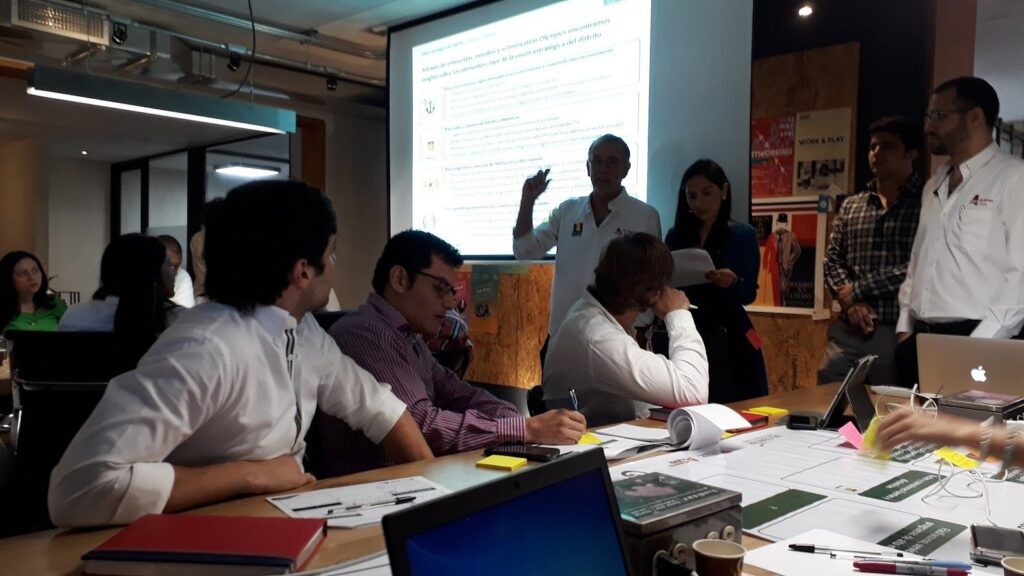
Last updated: May 2026. Colombia has spent the last decade making it dramatically easier to start a business, on paper. The actual experience for a foreigner with a laptop, a cédula in their pocket, and a small idea worth registering is genuinely workable, but it is more practical-paperwork-and-bank-visits than the glossy "Colombia: easy place to do business" pitch suggests. This guide walks through every step of forming and operating a small business in Barranquilla in 2026, from picking your legal structure, through registering at the Cámara de Comercio de Barranquilla, to your first payroll and a tax regime that does not bury you. The information about SAS structure, taxes, and registration applies anywhere in Colombia. Where things differ in Barranquilla, chamber hours, ICA rates, where to find a decent contador, it is called out.
Who this guide is for
Three audiences:
- Foreigners who already hold (or are getting) a cédula and want to register a real local business
- Colombians starting their first SAS or operating as persona natural comerciante
- Existing freelancers about to cross from informal to "proper company" territory
What this guide is not: a substitute for a contador (accountant) or a lawyer. You will need both. What it does is get you to the point where you know what to ask them, what they should be doing for you, and what each step actually costs.
Before you set up: visa, cédula, and the foreign-owner question
Your first decision is whether you can legally operate a business in Colombia at all. Three rough categories:
You hold a Colombian cédula, citizenship cédula or a cédula de extranjería tied to a Migrant or Resident visa: you can register a business with no special steps beyond the normal flow.
You are on an active visa with cédula de extranjería: same as above. You can be a shareholder, a legal representative, sign payroll, and operate normally.
You are on a tourist permit (PIP) or have no visa: you can technically own shares in a Colombian company without a cédula, share ownership is a property right, not a labor one. But you cannot legally act as the legal representative, sign contracts on the company's behalf, or work for it. Practically, that means you need to either: (a) put a Colombian partner, spouse, friend, or hired apoderado, as legal representative, (b) qualify for an M-Inversionista visa (350 SMMLV minimum investment, around COP 567 million / USD 142,000 at 4,000:1), or (c) get a different M visa first (Nómada Digital, partner of a Colombian, etc.) plus a cédula, then form the company.
For most readers of this site, the practical path is: get a cédula first via whichever visa fits your situation, then register the business. The full visa picture is in our Colombia visa guide.
Choosing your legal structure
For a one- or two-person business, you have three realistic options:
Persona Natural Comerciante (sole proprietor): simplest. You are the business. You register with the Cámara de Comercio as a persona natural comerciante, get a RUT under your cédula, and that is it. Income from the business is your personal income. Cheap to set up, under COP 100,000 / USD 25 in chamber fees if your declared assets are modest. Downside: no liability separation. If the business is sued, your house is on the table.
SAS (Sociedad por Acciones Simplificada): the modern Colombian small-business workhorse. Introduced by Law 1258 of 2008 specifically to make small companies easy. One shareholder is enough, you can be the only shareholder and the only legal representative. No minimum capital. You set the bylaws yourself. Liability is separated, the company has its own NIT, its own bank accounts, its own debts. Roughly nine in ten new small companies in Colombia register as SAS, for good reason.
LTDA, S.A.: older corporate forms. Skip them unless your accountant or lawyer specifically says you need one. SAS does everything they do with less paperwork and lower cost.
The rest of this guide assumes you are forming an SAS, because that is what almost everyone reading this should do.
Step 1: Check that your business name is available
Go to consultanombre.rues.org.co, the unified RUES (Registro Único Empresarial y Social) name search. Type your proposed company name. If nothing identical comes back, you are probably clear.
Be more thorough by also searching the same name in trademarks via the SIC's database at sic.gov.co. A clear chamber name does not mean you are not stepping on an existing trademark. For a pure local service business this is rarely an issue, but if you plan to use a distinctive brand, check.
You do not formally "reserve" a name. You confirm availability, then register the company under that name. The name becomes yours when the company exists.
Step 2: Draft and register the SAS bylaws
The SAS bylaws (estatutos) define:
- Company name and sigla (short form, e.g. "Mi Negocio SAS")
- Registered office address (must be a real address in your municipality, your apartment is fine if you actually work from there)
- Corporate purpose (objeto social), list every activity you might plausibly do; broad is better than narrow
- Term, set it to indefinido (indefinite) unless you have a reason not to
- Authorized, subscribed, and paid-in capital, you decide; can be COP 1,000,000 minimum in practice
- Shareholders, share count, and share value
- Legal representative (you, if solo) and their powers
- Reserves and dividend rules
You do not need a notary for an SAS unless real estate is being contributed as capital. The Cámara de Comercio accepts a private document signed by the shareholders.
Two ways to do it:
- Use the VUE template. The Ventanilla Única Empresarial at vue.gov.co has a guided wizard that produces compliant SAS bylaws, then files everything (chamber registration, RUT request, mercantile registration) in one online flow. This is the fastest, cheapest, and most foreigner-friendly path. You will need a digital signature (firma digital), VUE walks you through that. Cost: about COP 200,000 to 400,000 / USD 50 to 100 for a small company, depending on declared capital.
- Hire a lawyer. Standard fee in Barranquilla for SAS formation: COP 800,000 to 2,500,000 / USD 200 to 625, depending on the lawyer. Worth it if you have multiple shareholders, special governance needs, or want bespoke bylaws.
After registration you receive the Certificado de Existencia y Representación Legal, the company's birth certificate. Print a fresh copy each time you open a bank account or sign a major contract; banks usually want one issued in the last 30 days.
Step 3: Get your RUT and NIT
The RUT (Registro Único Tributario) is your tax registration with DIAN, Colombia's IRS equivalent. The NIT (Número de Identificación Tributaria) is the resulting tax ID. The VUE flow includes a RUT request, so for most people this happens automatically as part of step 2.
If you are registering manually, do the RUT online at the DIAN portal (muisca.dian.gov.co). You will be assigned responsabilidades, codes for your tax obligations. Common ones for a small SAS:
- 05: Régimen Ordinario (income tax)
- 47: Régimen Simple (if you opt in, see below)
- 48: IVA (VAT), applies if you sell IVA-applicable goods or services
- 52: Common monthly information report
Print the RUT. You will show it constantly, landlords, banks, payment processors, clients.
Step 4: Open a business bank account
You need a separate company account. Mixing personal and company funds is the fastest way to make your contador's life unmanageable and trigger DIAN questions later.
The big four for small businesses in Barranquilla are Bancolombia, BBVA, Davivienda, and Banco de Bogotá. All have decent online onboarding now, but you will usually still have to physically appear at a branch with:
- Original cédula and a notarized copy
- Cámara certificate (under 30 days old)
- RUT
- Initial deposit (varies, usually COP 100,000 to 500,000 / USD 25 to 125)
- For foreign legal representatives: passport plus cédula de extranjería. A tourist passport alone is usually rejected for company accounts.
Bancolombia tends to be the most foreigner-friendly in Barranquilla. BBVA's digital onboarding is the smoothest if it accepts your case. Davivienda has the broadest branch network on the Caribbean coast.
Mistakes to avoid:
- Do not open the account in your personal name with a "ventas del negocio" description. It is a personal account; it will not satisfy DIAN.
- Get the debit card enabled for online use immediately. Some Colombian bank cards default to "POS only", useless for paying AWS or Google Workspace. Ask for compra por internet activated at account opening.
- Set up tokens or app-based 2FA. You will be moving company money; you want hardware or app-based authentication on every transfer.
For the deeper banking picture, see our Banking in Barranquilla guide.
Step 5: Municipal registration, ICA and signage
The Cámara de Comercio sends your registration data to Barranquilla's Secretaría de Hacienda Distrital, but you should still verify your ICA registration is active. ICA (Impuesto de Industria y Comercio) is the local business tax, paid bimonthly or annually depending on regime, at rates ranging from 4 to 13.8 por mil (0.4% to 1.38%) of gross revenue, depending on your activity code (CIIU).
Common CIIU codes used by small services in Barranquilla:
- 6201, 6202 (software / IT consulting): ICA tariff around 7‰
- 7020 (management consulting): around 7‰
- 7311 (advertising and marketing): around 7‰
- 5610, 5613 (food services / restaurants): around 13.8‰
- 4711+ (retail): varies by sub-activity
If you have a physical location with public-facing signage, you also need:
- Concepto sanitario from Secretaría de Salud (food and personal-services activities)
- Concepto de uso del suelo, confirms the activity is permitted in that zone
- Concepto técnico de seguridad humana from the fire department for any commercial premises
- Sayco & Acinpro dues if you play music in your premises (Colombia's PRO collective)
For a one-person consulting or digital business operating from an apartment, none of those apply.
Step 6: Hire, or do not
The economics of hiring in Colombia are heavy, and they are the reason most very-small businesses run for years on contractors (prestación de servicios) rather than employees.
For a salaried employee at the minimum wage (2026 SMMLV approximately COP 1.42 million / USD 356 per month), the all-in cost to the employer is about 1.52× the salary, call it COP 2.16 million / USD 540 per month. The roughly 52% loaded on top is:
- Pension (Pensiones): 12% employer, 4% employee
- Health (Salud): 8.5% employer, 4% employee
- ARL (workplace risk insurance): 0.522% to 6.96% depending on activity, most office work is in the lowest tier
- Parafiscales (SENA 2%, ICBF 3%, Caja de Compensación 4%), some are exempt for businesses below a revenue threshold
- Cesantías (severance fund): one month's salary per year worked, paid annually
- Intereses sobre cesantías: 12% on cesantías
- Prima de servicios: one month's salary per year worked, paid in two halves (June and December)
- Vacaciones: 15 working days per year
A contrato de prestación de servicios (independent contractor) avoids all of that, but it has to be a real contractor relationship, with the contractor managing their own tools, hours, and clients. DIAN and the Ministerio de Trabajo can reclassify a sham contractor as an employee and require you to pay back-benefits. If your "contractor" works only for you, on your schedule, with your equipment, in your office, they are an employee. Pay them like one.
For your first hire, most Barranquilla service businesses use a contrato a término fijo (fixed-term) for the first year, then convert to término indefinido (indefinite). Indefinite contracts can include a período de prueba (probation) of up to two months.
Step 7: Your digital presence
Most new small businesses in Colombia underestimate how much business comes from a clean Google search result with a real website rather than just an Instagram. A Spanish-only Instagram is fine for street food. For anything where the customer is comparing three options before contacting you, a clinic, a coworking space, a B2B service, an English-speaking lawyer, the website is what they trust.
The practical baseline:
- A domain in .com (international audience) or .co (Colombian audience), or both
- A real CMS or static site that loads fast on mobile (most of your traffic is on phones)
- A professional business email address, yourname@yourcompany.com, not yourcompany.bquilla@gmail.com
- A clean Google Business Profile with a real address, phone, and recent photos
- Schema markup so your business appears in rich results
- Spanish and English content if you target both audiences
If you are building this yourself, fine, WordPress, Squarespace, Webflow, or a static site on Cloudflare Pages all work, with tradeoffs in Spanish-language SEO and Colombian payment integrations.
If you want it built by people who actually live and run businesses in Colombia: the team behind this site builds páginas web para pymes en Barranquilla through PymeWebPro. Spanish copy that sounds Colombian (not Google-translated), integrations with PSE / Bancolombia / Wompi for online payments, IVA-aware checkout, and infrastructure that does not lock you into a proprietary CMS.
Fixed-fee one-off builds or managed monthly arrangements. Transparent pricing, no contracts longer than 12 months, and we hand over the keys (domain, hosting, source) the day you ask. See pymewebpro.com, or contact us via this site's contact page.
Picking a tax regime: Régimen Simple vs Ordinario
Colombia introduced the Régimen Simple de Tributación in 2019 specifically to give small businesses a less-painful tax setup. It rolls income tax, ICA (in participating municipalities, Barranquilla participates), and a portion of the parafiscal load into a single bimonthly payment based on a flat percentage of gross revenue.
Régimen Simple eligibility, 2026:
- Annual gross revenue below 100,000 UVT (about COP 5.1 billion / USD 1.275 million)
- Single shareholder must be a persona natural, not a corporate shareholder
- Activities limited to eligible CIIU codes, most service businesses qualify; some financial services, mining, and certain regulated activities do not
- No conflicting international tax-residency obligations
If you qualify, the rates run roughly 2%-8% of gross revenue depending on activity. For a software / IT / consulting business, the Simple rate is around 4.9% of gross revenue, and that single number replaces income tax, ICA, and a portion of parafiscales.
The math is usually favorable for service businesses, particularly ones with low costs and high margin. For a high-cost business (restaurants, retail with inventory), the Régimen Ordinario often comes out cheaper because you can deduct your real costs.
You opt in or out of Simple once a year, by January 31 for that calendar year. Get a contador to run your numbers both ways before deciding.
Realistic monthly costs for a one-person SAS
One founder, no employees, working from home in Barranquilla, 2026:
| Item | Monthly cost (COP) | USD equiv (4,000:1) |
|---|---|---|
| Contador (accountant) | 250,000 to 500,000 | 60 to 125 |
| Bank account fees | 0 to 50,000 | 0 to 12 |
| Domain + hosting | 10,000 to 20,000 | 2 to 5 |
| Software (G Suite, project tools, etc.) | 80,000 to 200,000 | 20 to 50 |
| Cellphone (business line) | 40,000 to 80,000 | 10 to 20 |
| Electronic invoicing platform | 30,000 to 100,000 | 7 to 25 |
| Régimen Simple (4.9% on COP 10M revenue, sample) | 490,000 | 122 |
| Total | ~900,000 to 1,440,000 | ~225 to 360 |
Add an annual Renovación de Matrícula Mercantil (chamber renewal) of COP 200,000 to 1,000,000 in March, depending on declared assets.
If you hire one minimum-wage employee, add roughly COP 2.46 million / USD 615 per month all-in.
Finding an accountant (contador)
You will need one. DIAN and ICA filings are bimonthly or monthly, and the penalties for late filing compound fast. A bad contador will quietly bury you in fines you do not see until DIAN sends a notification 18 months later.
What to look for:
- Contador Público registered with the JCC (Junta Central de Contadores), verifiable by their tarjeta profesional number
- Direct experience with SAS and Régimen Simple
- Familiar with foreign-owned companies if relevant, different filing nuances around Banco de la República, FATCA, and CRS reporting
- Speaks English (or has an English-speaking partner) if your Spanish is intermediate. Taxes are no place for translation ambiguity
- Sends you the receipt of every filing, DIAN's confirmation pages, with timestamps. If they cannot show you proof of filing, find someone else
Typical fees in Barranquilla for a one-person SAS with low volume: COP 250,000 to 500,000 / USD 60 to 125 per month. Higher with employees (payroll filings) or international operations.
Electronic invoicing (factura electrónica)
Since 2022, electronic invoices are mandatory for almost all sales in Colombia. You must invoice through a DIAN-authorized provider, the common ones in Colombia are Siigo, Alegra, Facture, World Office, and Helisa. Costs run from COP 30,000 to 100,000 per month depending on volume and features. Your contador usually has a preferred platform.
The DIAN radian system also handles documento soporte (for purchases from non-billing suppliers like very-small persona natural vendors) and nómina electrónica (electronic payroll) once you have employees.
Foreign investment registration (Banco de la República)
If you are a foreign investor, funding the company with money from abroad rather than from a Colombian-source income, the inflow has to be registered with Banco de la República as Inversión Extranjera Directa (IED).
The mechanics:
- Send the money via a cuenta de compensación or via SWIFT to the company's Colombian bank account
- The receiving bank (the intermediario del mercado cambiario) processes a Form 4 declaration to Banco de la República
- The investment is registered at the value declared, in the currency declared
- When you eventually send dividends or capital out, that registered amount is the basis for what you can repatriate
This is not optional. Failing to register foreign investment is a sanctionable offense and prevents you from later pulling the money out cleanly. If you are putting USD or EUR into your Colombian SAS, talk to your contador before the wire goes out.
Hiring a lawyer for setup vs DIY
Genuinely DIY-friendly:
- One shareholder, one legal representative (you are both)
- Standard activities, standard bylaws
- Capital under COP 100 million
- Domestic source of funds
Get a lawyer:
- Multiple shareholders with different roles or vesting
- Foreign capital crossing the IED registration threshold
- A foreign LLC or corporation as the parent
- Activities requiring sectoral licenses (financial services, healthcare, education, alcohol)
- Plans to apply for a Migrant-Inversionista visa using the company
Lawyer rates in Barranquilla for company formation: COP 800,000 to 2,500,000 / USD 200 to 625 fixed fee. Worth it for any non-trivial setup.
Where to register in Barranquilla
Cámara de Comercio de Barranquilla, Sede Principal
Vía 40 No. 36-135, Barrio Las Flores
Mon-Fri 8am to 5pm typically (verify before going)
Most procedures are also available online via VUE.
Sede La Castellana
Carrera 53 No. 96-25, La Castellana
Sede Soledad
Carrera 22 No. 13-10, Soledad
DIAN, Dirección Seccional Barranquilla
Calle 45 No. 50-50, Edificio La Aduana
Most RUT and tax filings are now online; physical visits only for biometric updates or specific cases.
Common mistakes to avoid
- Mixing personal and company money. The SAS is a separate person legally. Treat it as one.
- Skipping a RUT update when something changes. Address change, new activity, new shareholder, all require a RUT update with DIAN, usually within one month.
- Not renewing the chamber registration in March. Late renewals incur fees and can suspend your certificado. Mark the calendar.
- Treating contractors as employees. If they only work for you, on your schedule, with your equipment, they are an employee. DIAN and Mintrabajo can force you to pay back-benefits going years.
- Forgetting electronic invoicing. Factura electrónica is mandatory; manual paper invoices are not legally valid for most sales.
- No backup of company documents. Bylaws, certificates, RUT, contracts, keep them in a cloud folder you control. Banks and DIAN ask for them more often than you expect.
Frequently asked questions
How long does it take to register an SAS in Barranquilla?
Online via VUE: 24 to 72 hours from submission to receiving your certificado. With a lawyer: 5 to 7 business days end to end. The slowest part is usually getting the digital signature certificate that VUE requires.
Can I register an SAS while on a tourist permit (PIP)?
You can be a shareholder, but you cannot be the legal representative or actively manage the business without a visa and cédula. In practice, set up a Colombian partner as legal rep, or get a visa first.
Do I need an office?
No. The registered address can be your home. A coworking-space mailbox at WeWork, Selina, or similar also works.
Should I register for IVA?
You are required to register for IVA if you sell IVA-applicable goods or services and your annual gross is above 3,500 UVT (about COP 178 million). Below that you can be in No Responsable de IVA. Régimen Simple changes some of this, ask your contador.
Can I keep the SAS dormant?
Yes, but you still owe annual chamber renewal and minimum DIAN filings. Cost to keep a dormant SAS alive: about COP 300,000 to 500,000 / USD 75 to 125 per year.
What is the difference between razón social and nombre comercial?
Razón social is your legal company name (e.g. "Mi Negocio SAS"). Nombre comercial is the brand name you trade under. They can be the same or different. If different, register the nombre comercial with the SIC for trademark protection.
How do I close an SAS?
Three steps: shareholders approve dissolution; appoint a liquidator (the legal rep is fine); settle debts and file the acta de liquidación final with the chamber. The chamber issues a certificado de cancelación; DIAN gets a final RUT cancellation. Time: three to six months minimum.
What about Pico y Placa for delivery vehicles?
Barranquilla applies vehicle-restriction rules to commercial vehicles in some zones. If your business depends on a delivery van, factor in that you may not have access on certain days. Details in our driving guide.
Further reading on this site
- Banking in Barranquilla: The Complete Expat Guide (2026)
- Tax Residency in Colombia: The 183-Day Rule (2026)
- Colombia Visa Guide: Every Option for Living in Barranquilla
- Best Coworking Spaces in Barranquilla
- Working Remotely in Barranquilla: The Digital Nomad Guide
- Cost of Living in Barranquilla: A Real 2026 Breakdown
This guide is general information, not legal or tax advice. Colombian regulations change, verify current SMMLV, UVT values, and ICA rates with DIAN, the Cámara de Comercio de Barranquilla, and a registered contador before acting on the numbers above. If you are launching, hire a contador before your first month closes; the cost is small compared to fixing a missed filing later.