Understanding Colombia’s Estrato SystemEntendiendo el Sistema de Estrato en Colombia
Paulette Romero
August 25, 2023, Updated April 23, 2026 · 7 min read
Specific question while you read? Ask Catalina, the Barranquilla Guide concierge.¿Pregunta específica mientras lees? Pregúntale a Catalina, la concierge de Barranquilla Guide.Chat with Catalina ›Habla con Catalina ›
Last updated: April 2026. Foreigners moving to Colombia hit the word “estrato” within their first week, usually attached to a utility bill, a rental listing, or a mild real-estate humblebrag. It’s one of the most misunderstood features of Colombian life. This guide explains what estratos actually are, how they’re assigned, what they cost you (and what they save you), and how to read them correctly in Barranquilla.
What the estrato system actually is
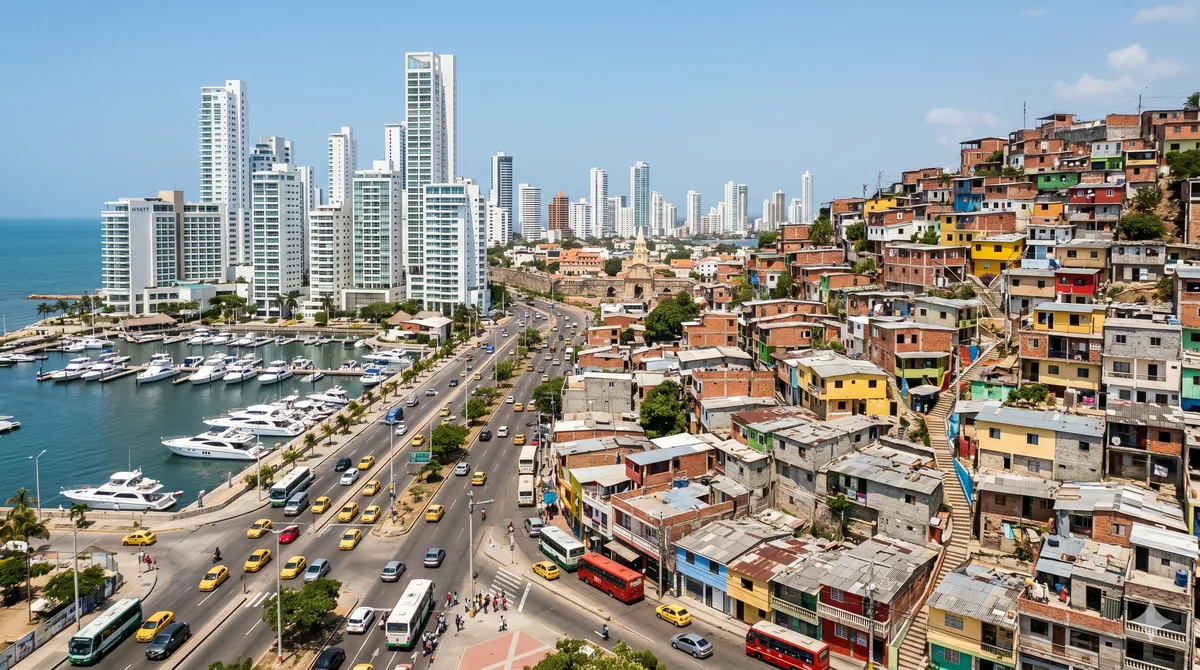
The estrato socioeconómico is a classification applied to residential dwellings, not to people. Every home in urban Colombia is assigned an estrato from 1 to 6, based on the physical characteristics of the building and its surroundings. Its primary legal function is cross-subsidization of public utilities: lower-estrato homes pay subsidized rates; higher-estrato homes pay surcharges that fund those subsidies.
The system was formalized in Ley 142 de 1994 (the Domiciliary Public Services Law) and refined by CONPES and DANE methodologies. Classification is carried out by each municipality using a national methodology and published through municipal planning offices. DANE coordinates national standards.
Crucial point to understand up front: the estrato describes the house, not the household. A retired schoolteacher living in a flat she bought forty years ago can live in estrato 5, while a young professional renting in the same block might live in estrato 6, a block over in estrato 4. It’s the dwelling that’s classified, not the occupant.
The six strata, what they mean
Estrato 1, Bajo-bajo: lowest income. Typical housing: self-built, limited services, often on urban periphery.
In 2024, roughly 75% of Colombian households lived in estratos 1 to 3; ~20% in estrato 4; and ~5% in estratos 5 to 6 combined. The system is a crude instrument, imperfect at the edges, but captures the broad socioeconomic shape of Colombian cities.
How estrato affects utility bills
This is the practical meat of the system. Under Ley 142, utility tariffs are structured so that higher-estrato users subsidize lower-estrato users on a base consumption (the consumo básico). Consumption above the subsistence threshold is billed at market rate regardless of estrato.
Estrato 1: ~50% subsidy (you pay ~50% of the base rate)
Estrato 2: ~40% subsidy
Estrato 3: ~15% subsidy
Estrato 4: no subsidy, no surcharge (pays cost)
Estrato 5: ~+20% surcharge
Estrato 6: ~+20% surcharge
This applies to electricity (Air-e in Barranquilla), water and sewage (Triple A), natural gas (Gases del Caribe), and fixed-line phone / internet (though the last has partially drifted away from estrato-based pricing as competition grew).
Impact on a Barranquilla expat’s bills: an apartment in estrato 6 Villa Santos easily runs COP 600k-900k/month in combined utilities if you use A/C heavily, while the same consumption pattern in estrato 4 El Prado might be COP 350k-550k. See the utilities section of our cost of living guide.
What else estrato affects
Public-transport subsidies for low-estrato households in some cities (Transmetro in Barranquilla does not currently apply estrato discounts).
Access to certain government programs, Familias en Acción, housing subsidies (VIS/VIP), cash transfers, targeted at estratos 1 to 3.
School placement in some public schools, sometimes tied to residential estrato.
EPS contribution base: does not directly depend on estrato. Health contributions are based on declared income.
Property tax (impuesto predial): calculated on cadastral value, not estrato, but cadastral value correlates with estrato.
Private insurance and financial services: some banks and insurers quietly use estrato as a proxy variable for risk.
Social signaling: Colombians absolutely do use estrato as shorthand for social class in conversation. The government has debated renaming or reforming the system for exactly this reason.
Estrato by Barranquilla neighborhood
Neighborhood-by-neighborhood estrato can be granular, even the block matters. Broad strokes for the northern expat-relevant areas:
Altos del Limón: estrato 6. Newest high-end gated developments.
Villa Santos: estrato 6 (some 5). Premium waterfront apartments.
Villa Campestre: estrato 6 (some 5).
Buenavista: estrato 5 to 6, commercial and residential mix.
Villa Country: estrato 5. Modern mid- and high-rise.
Riomar: estrato 5.
Alto Prado: estrato 5 (some 4).
El Prado: estrato 4 to 5, depending on block. The historic core is mostly 4; the modernized western edge is 5.
El Golf: estrato 5.
Ciudad Jardín: estrato 4.
Granadillo: estrato 4.
Boston: estrato 3 to 4.
Nuevo Horizonte, La Campiña: estrato 3.
Centro (historic downtown): mostly commercial; residential blocks estrato 2 to 3.
Rebolo, La Luz, Santa María, Las Nieves: estrato 1 to 2.
Soledad (the adjoining municipality where the airport sits): mostly estrato 1 to 3.
For a fuller read on who lives where and what each neighborhood feels like, see our neighborhoods guide.
How to check the estrato of a specific address
Look at a utility bill. Air-e (electricity), Triple A (water), or Gases del Caribe bills print the estrato near the property address. This is the fastest check.
Ask the landlord or portero. Everyone who rents or sells a property knows the estrato.
Barranquilla municipal planning office, Secretaría de Planeación Distrital publishes estrato layers.
DANE provides national methodology reference: dane.gov.co.
Common misconceptions
“Estrato measures income.” Not directly. It measures housing characteristics in a neighborhood. People with high incomes sometimes live in estrato 4 for historical or family reasons; retirees in older estrato 6 flats can be cash-poor.
“Higher estrato is always better.” Higher estrato means higher utility bills and higher property tax. For some expats, estrato 4 neighborhoods like parts of El Prado offer the best combination of cost and livability.
“Estrato is assigned to me.” The classification is attached to the dwelling, not to you personally. Move, and your estrato changes with the address.
“Estrato determines what schools my kids go to.” Mostly no, especially in private schools. Some public schools do use geographic zoning that correlates with estrato.
“The system is being abolished.” There have been proposals, DANE has explored an income-based alternative, but as of 2026, estratos remain the basis for utility cross-subsidy. Reforms inch forward.
What this all means for a foreigner moving to Barranquilla
Read the estrato when you see a listing. It tells you the utility-cost tier and gives a quick signal of the neighborhood character. Ask if it’s not listed.
Budget utilities accordingly. Same apartment size, estrato 6 costs substantially more per month in utilities than estrato 4.
Don’t over-index on estrato as a prestige number. The best day-to-day neighborhoods for expats (El Prado, Alto Prado, Villa Country) span 4 to 5, not always 6.
Verify with a bill. Listings sometimes overstate. The Air-e or Triple A bill is the source of truth.
If you’re estrato 5 or 6 and will be in Colombia long enough to care about tax, check if a lower-estrato area suits you as well. Utility savings of COP 300k/month × 12 months is real money.
FAQ
Can I change the estrato of my home? Only via formal reclassification by the municipal planning office, and only if the neighborhood’s physical character has changed materially. Individual homeowners can’t just request a change.
What estrato is my Airbnb? Hosts usually know; the bills will show it. For a short stay it doesn’t matter much, host absorbs utilities.
Does my rent include utilities? In most Barranquilla long-term leases, no, utilities are paid separately by the tenant. This makes the estrato highly relevant. See our housing guide.
Will my tenant status affect the estrato? No. The estrato attaches to the property regardless of whether it’s owner-occupied or rented.
Is there an estrato 0 or estrato 7? No. The scale is 1 to 6. Some rural homes are unclassified; unclassified homes are billed at a default rate.
How are new buildings classified? By the planning office, using the neighborhood’s profile and the building’s own characteristics (materials, size, amenities, finishes).
Do I need to know my estrato to open a bank account or sign a lease? The lease will state it. Banks don’t ask directly; they look at utility bills (which show estrato) as proof of residence.
Does the estrato affect property prices? Yes, both because the neighborhood is priced accordingly and because future owners will face those utility surcharges or subsidies.
Are estratos the same in all Colombian cities? The 1 to 6 framework is national, but classifications are city-specific. Estrato 5 in Medellín’s El Poblado and estrato 5 in Bogotá’s Chicó aren’t identical in character, each reflects local standards.
Informational only. Subsidy/surcharge percentages are set by national and local regulation and adjusted periodically; always verify current figures on your utility bill and through MinVivienda or DANE. Last review: April 2026.
Still have questions?¿Todavía tienes preguntas?
Catalina is our concierge. Ask her about visas, neighborhoods, healthcare, prices, anything Barranquilla. She answers in chat or WhatsApp, English or Spanish, free.Catalina es nuestra concierge. Pregúntale sobre visas, barrios, salud, precios, cualquier cosa de Barranquilla. Responde por chat o WhatsApp, en inglés o español, gratis.
Specific question while you read? Ask Catalina, the Barranquilla Guide concierge.¿Pregunta específica mientras lees? Pregúntale a Catalina, la concierge de Barranquilla Guide.Chat with Catalina ›Habla con Catalina ›
Última actualización: abril 2026. Los extranjeros que se mudan a Colombia se topan con la palabra "estrato" en su primera semana, generalmente adjunta a una factura de servicios, un anuncio de arriendo o un comentario discreto sobre bienes raíces. Es una de las características más incomprendidas de la vida colombiana. Esta guía explica qué son realmente los estratos, cómo se asignan, qué te cuestan (y qué te ahorran), y cómo leerlos correctamente en Barranquilla.
Qué es realmente el sistema de estrato
El estrato socioeconómico es una clasificación aplicada a viviendas residenciales, no a personas. Cada hogar en la Colombia urbana recibe un estrato de 1 a 6, basado en las características físicas del edificio y sus alrededores. Su función legal principal es la subvención cruzada de servicios públicos: los hogares de estrato bajo pagan tarifas subsidiadas; los hogares de estrato alto pagan recargos que financian esos subsidios.
El sistema se formalizó en la Ley 142 de 1994 (Ley de Servicios Públicos Domiciliarios) y se refinó con metodologías de CONPES y DANE. La clasificación la realiza cada municipio usando una metodología nacional y se publica a través de las secretarías de planeación municipales. DANE coordina los estándares nacionales.
Punto crucial para entender desde el principio: el estrato describe la casa, no al hogar. Una maestra jubilada que vive en un apartamento que compró hace cuarenta años puede vivir en estrato 5, mientras que un profesional joven que arrienda en la misma cuadra puede vivir en estrato 6, una cuadra más allá en estrato 4. La clasificación va a la vivienda, no al ocupante.
Los seis estratos, qué significan
Estrato 1, Bajo-bajo: ingresos más bajos. Vivienda típica: autoconstruida, servicios limitados, frecuentemente en la periferia urbana.
En 2024, aproximadamente el 75% de hogares colombianos vivía en estratos 1 a 3; ~20% en estrato 4; y ~5% en estratos 5 a 6 combinados. El sistema es un instrumento tosco, imperfecto en los bordes, pero captura la forma socioeconómica general de las ciudades colombianas.
Cómo el estrato afecta las facturas de servicios
Este es el corazón práctico del sistema. Bajo la Ley 142, las tarifas de servicios están estructuradas de manera que los usuarios de estrato alto subsidian a los usuarios de estrato bajo en un consumo base (el consumo básico). El consumo por encima del umbral de subsistencia se factura a tarifa de mercado sin importar el estrato.
Estrato 1: ~50% de subsidio (pagas ~50% de la tarifa base)
Estrato 2: ~40% de subsidio
Estrato 3: ~15% de subsidio
Estrato 4: sin subsidio, sin recargo (paga costo)
Estrato 5: ~+20% recargo
Estrato 6: ~+20% recargo
Esto se aplica a electricidad (Air-e en Barranquilla), agua y alcantarillado (Triple A), gas natural (Gases del Caribe), y telefonía fija e internet (aunque esto último se ha desvinculado parcialmente de la tarificación basada en estrato conforme creció la competencia).
Impacto en las facturas de un expat en Barranquilla: un apartamento en estrato 6 en Villa Santos fácilmente suma COP 600k-900k/mes en servicios combinados si usas A/C intensamente, mientras que el mismo patrón de consumo en estrato 4 en El Prado podría ser COP 350k-550k. Ve la sección de servicios de nuestra guía de costo de vida.
Qué más afecta el estrato
Subsidios de transporte público para hogares de estrato bajo en algunas ciudades (Transmetro en Barranquilla actualmente no aplica descuentos por estrato).
Acceso a ciertos programas gubernamentales, Familias en Acción, subsidios de vivienda (VIS/VIP), transferencias en efectivo, dirigidos a estratos 1 a 3.
Colocación escolar en algunas escuelas públicas, a veces vinculada al estrato residencial.
Base de contribución de EPS: no depende directamente del estrato. Las contribuciones a salud se basan en ingresos declarados.
Impuesto predial: se calcula sobre valor catastral, no sobre estrato, pero el valor catastral correlaciona con estrato.
Seguros privados y servicios financieros: algunos bancos y aseguradoras discretamente usan el estrato como variable proxy para riesgo.
Señalización social: los colombianos absolutamente usan el estrato como abreviatura para clase social en conversación. El gobierno ha debatido renombrar o reformar el sistema exactamente por esta razón.
Estrato por barrio de Barranquilla
El estrato por barrio puede ser granular, incluso la cuadra importa. Amplios trazos para las áreas del norte relevantes para expats:
Altos del Limón: estrato 6. Desarrollos cerrados de alta gama más nuevos.
Villa Santos: estrato 6 (algunos 5). Apartamentos premium frente al agua.
Villa Campestre: estrato 6 (algunos 5).
Buenavista: estrato 5 a 6, mezcla comercial y residencial.
Villa Country: estrato 5. Edificios mid- y high-rise modernos.
Riomar: estrato 5.
Alto Prado: estrato 5 (algunos 4).
El Prado: estrato 4 a 5, dependiendo de la cuadra. El núcleo histórico es mayormente 4; el borde occidental modernizado es 5.
El Golf: estrato 5.
Ciudad Jardín: estrato 4.
Granadillo: estrato 4.
Boston: estrato 3 a 4.
Nuevo Horizonte, La Campiña: estrato 3.
Centro (downtown histórico): mayormente comercial; bloques residenciales estrato 2 a 3.
Rebolo, La Luz, Santa María, Las Nieves: estrato 1 a 2.
Soledad (el municipio adjunto donde está el aeropuerto): mayormente estrato 1 a 3.
Para una lectura más completa sobre quién vive dónde y qué se siente en cada barrio, ve nuestra guía de barrios.
Cómo verificar el estrato de una dirección específica
Mira una factura de servicios. Las facturas de Air-e (electricidad), Triple A (agua) o Gases del Caribe imprimen el estrato cerca de la dirección de la propiedad. Esta es la verificación más rápida.
Pregúntale al arrendador o portero. Todos los que arriendan o venden una propiedad conocen el estrato.
Secretaría de Planeación Distrital de Barranquilla, publica capas de estrato.
DANE proporciona referencia de metodología nacional: dane.gov.co.
Conceptos erróneos comunes
"El estrato mide ingresos." No directamente. Mide características de vivienda en un barrio. Personas con ingresos altos a veces viven en estrato 4 por razones históricas o familiares; jubilados en apartamentos antiguos de estrato 6 pueden estar sin efectivo.
"Estrato más alto siempre es mejor." Estrato más alto significa facturas de servicios más altas e impuesto predial más alto. Para algunos expats, barrios de estrato 4 como partes de El Prado ofrecen la mejor combinación de costo y habitabilidad.
"El estrato me es asignado a mí." La clasificación se adjunta a la vivienda, no a ti personalmente. Te mudas, y tu estrato cambia con la dirección.
"El estrato determina a qué escuelas van mis hijos." Mayormente no, especialmente en escuelas privadas. Algunas escuelas públicas sí usan zonificación geográfica que correlaciona con estrato.
"El sistema está siendo abolido." Ha habido propuestas, DANE ha explorado una alternativa basada en ingresos, pero a partir de 2026, los estratos siguen siendo la base para la subvención cruzada de servicios. Las reformas avanzan lentamente.
Qué significa todo esto para un extranjero que se muda a Barranquilla
Lee el estrato cuando veas un anuncio. Te dice el nivel de costo de servicios y da una señal rápida del carácter del barrio. Pregunta si no está listado.
Presupuesta servicios en consecuencia. Un apartamento del mismo tamaño, estrato 6 cuesta sustancialmente más por mes en servicios que estrato 4.
No sobre-indexes el estrato como número de prestigio. Los mejores barrios día a día para expats (El Prado, Alto Prado, Villa Country) abarcan 4 a 5, no siempre 6.
Verifica con una factura. Los anuncios a veces exageran. La factura de Air-e o Triple A es la fuente de verdad.
Si eres estrato 5 o 6 y estarás en Colombia el tiempo suficiente para preocuparte por impuestos, verifica si una área de estrato más bajo te sirve igual. El ahorro en servicios de COP 300k/mes × 12 meses es dinero real.
Preguntas frecuentes
¿Puedo cambiar el estrato de mi hogar? Solo mediante reclasificación formal por la secretaría de planeación municipal, y solo si el carácter físico del barrio ha cambiado materialmente. Los propietarios individuales no pueden simplemente solicitar un cambio.
¿Qué estrato tiene mi Airbnb? Los anfitriones usualmente lo saben; las facturas lo mostrarán. Para una estadía corta no importa mucho, el anfitrión absorbe los servicios.
¿Mi arriendo incluye servicios? En la mayoría de arrendamientos a largo plazo en Barranquilla, no, los servicios se pagan separadamente por el arrendatario. Esto hace el estrato muy relevante. Ve nuestra guía de vivienda.
¿Afectará mi condición de arrendatario el estrato? No. El estrato se adjunta a la propiedad sin importar si es ocupada por propietario o arrendada.
¿Hay estrato 0 o estrato 7? No. La escala es 1 a 6. Algunas viviendas rurales no están clasificadas; las viviendas sin clasificar se facturan a una tarifa por defecto.
¿Cómo se clasifican los edificios nuevos? Por la secretaría de planeación, usando el perfil del barrio y las características propias del edificio (materiales, tamaño, servicios, acabados).
¿Necesito saber mi estrato para abrir una cuenta bancaria o firmar un contrato de arriendo? El contrato lo indicará. Los bancos no preguntan directamente; observan las facturas de servicios (que muestran estrato) como prueba de residencia.
¿Afecta el estrato los precios de las propiedades? Sí, tanto porque el barrio se cotiza en consecuencia como porque futuros propietarios enfrentarán esos recargos o subsidios de servicios.
¿Son los estratos iguales en todas las ciudades colombianas? El marco 1 a 6 es nacional, pero las clasificaciones son específicas de cada ciudad. Estrato 5 en El Poblado de Medellín y estrato 5 en Chicó de Bogotá no son idénticos en carácter, cada uno refleja estándares locales.
Únicamente informativo. Los porcentajes de subsidio/recargo se establecen por regulación nacional y local y se ajustan periódicamente; siempre verifica cifras actuales en tu factura de servicios y a través de MinVivienda o DANE. Última revisión: abril 2026.
Still have questions?¿Todavía tienes preguntas?
Catalina is our concierge. Ask her about visas, neighborhoods, healthcare, prices, anything Barranquilla. She answers in chat or WhatsApp, English or Spanish, free.Catalina es nuestra concierge. Pregúntale sobre visas, barrios, salud, precios, cualquier cosa de Barranquilla. Responde por chat o WhatsApp, en inglés o español, gratis.
Get the guide in your inboxRecibe la guía en tu correo
Weekly picks, new guides, and things worth knowing about Barranquilla. No noise, no news feed. Just the useful stuff.Cada semana: recomendaciones, guías nuevas y lo que vale la pena saber de Barranquilla. Sin ruido, sin feed de noticias. Solo lo útil.