
Barranquilla sits at a hinge in the map. Behind it, the Río Magdalena finishes its 1,500-kilometer run from the Andes; in front of it, the Caribbean opens out. Between those two bodies of water lies a mess of cenagas, mangroves, and tidal flats that feed the city with a kind of seafood most Colombian kitchens only dream about: river fish that still taste of current, Caribbean catch landed the same morning, and shellfish pulled from brackish water where salt and freshwater meet. This is a guide to eating that food the way locals do, from beach ranchos and market stalls to the fine-dining rooms along Calle 84, with a little history for why any of it exists at all.
"Buenas, quiero reservar una mesa para [N] personas el [día] a las [hora]. ¿Tienen disponibilidad?"
"Hi, I'd like a table for [N] on [day] at [time]. Do you have availability?"
A little history & geography
The coast here is older than Barranquilla itself. Long before the city was a city, the Mokaná and the fishing settlements along the Ciénaga de Mallorquín were working the same waters. When Puerto Colombia’s pier opened in 1888, for a time the second-longest sea pier in the world, Barranquilla became Colombia’s front door, and the food coming through reflected it: Lebanese, Italian, Jewish, Chinese, and Afro-Caribbean influences layered onto an Indigenous base. The result is a regional cuisine that looks outward. Coconut rice and fried plantain sit next to whole snapper; ceviche runs Peruvian-style or costeño style with lime and raw onion; and the lisa, a humble mullet that spawns in the Ciénaga Grande, becomes arroz de lisa, a dish so specific to this coast that it shows up almost nowhere else.
The geography also explains the seasons. Semana Santa, the week before Easter, is the biggest seafood week of the year, Catholic tradition keeps red meat off the table, and every cocina in the city runs fish specials. October to December brings the lisa run at Bocas de Ceniza, the mouth of the Magdalena. Shrimp and bocachico move with the rains. Locals eat by that calendar, and the best kitchens still do too.
Where the seafood comes from
The Ciénaga de Mallorquín, just north of the city, is a 4,000-hectare coastal lagoon where fishermen still work from canoes. It’s the source of most of Barranquilla’s lisa, mojarra, róbalo, and the chipi chipi clams that give one beachfront village its nickname. Bocas de Ceniza, the artificial mouth where the Magdalena meets the sea, produces bocachico and river shrimp; you can ride the old freight train out along the jetty and watch the fishermen work. The Tubará and Salgar coast, west of Puerto Colombia, delivers snapper, sierra, and langostinos from small artisanal fleets that dock at Pradomar and Salgar every afternoon. And the Plaza del Pescado at the Gran Central de Abastos, Barranquilla’s wholesale fish market, is where most of the city’s restaurants, fondas, and home cooks actually do their shopping, usually before 8am.
Key dishes, explained
Arroz de lisa, the city’s signature dish. Smoked and salted lisa (mullet) cooked into rice with coconut milk and a quiet smokiness. Eaten wrapped in bijao leaf. If you try one thing in Barranquilla, this is it.
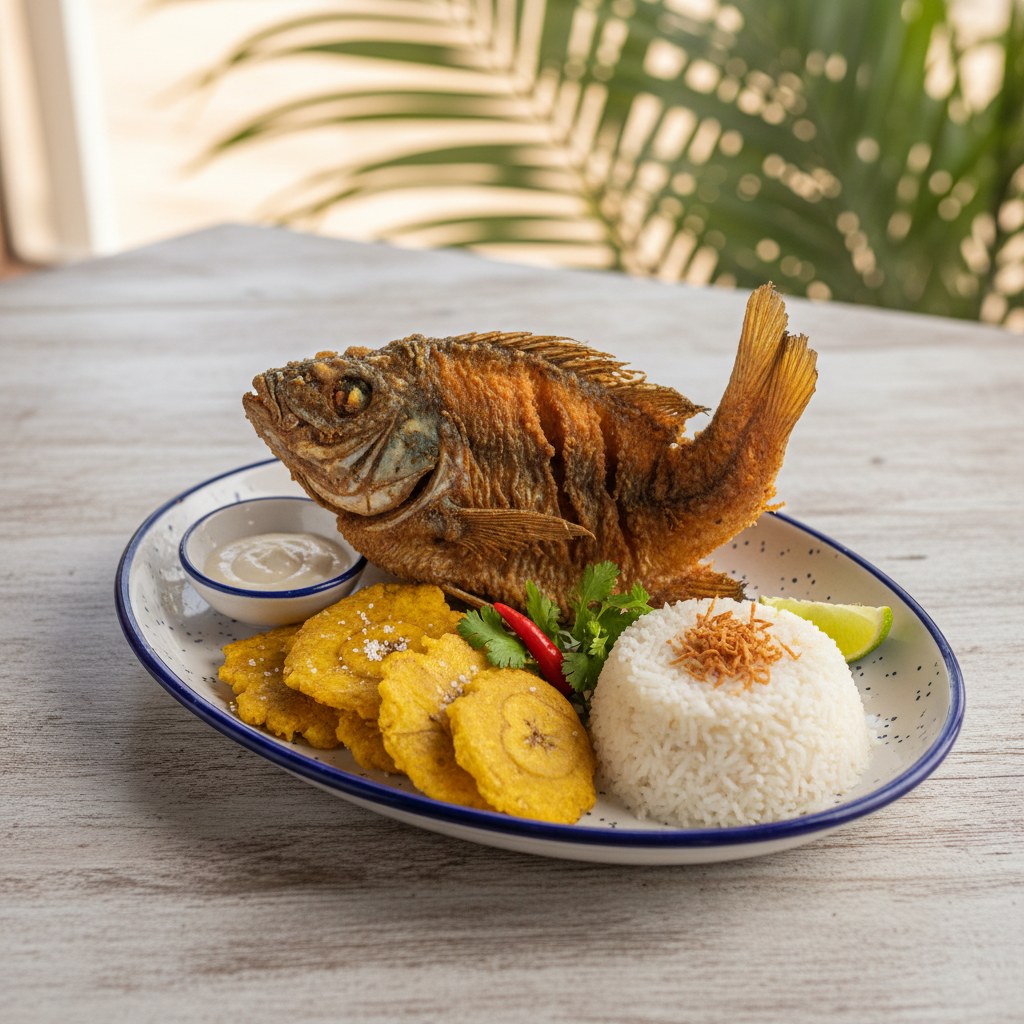
Mojarra frita, a whole tilapia or red porgy, scored and fried crisp, served with coconut rice, patacón, and a small salad. The standard coastal lunch.
Cazuela de mariscos, a rich seafood stew: shrimp, calamari, fish, crab, and sometimes lobster in a coconut-cream broth. Served bubbling in a clay pot.
Arroz con coco titoté, coconut rice cooked until the coconut milk caramelizes dark and sweet. The titoté is the toasty, almost-burnt coconut bit that forms at the bottom. Essential side for fried fish.
Ceviche costeño, the local version: lime, raw red onion, cilantro, and sometimes a little tomato sauce or pink sauce. Lighter than Peruvian ceviche, heavier on the onion.
Sancocho de pescado, a coastal fish stew with yuca, plantain, ñame, and a whole piece of fish (usually bocachico or sierra). Weekend food.
Cóctel de camarón, shrimp cocktail Colombian-style: shrimp, pink sauce, onion, cilantro, in a tall glass with saltines. A bar snack that became a classic.
Pescado a la brasa, grilled whole fish, usually over wood or charcoal, often rubbed with garlic and butter. Puerto Colombia specialty.
Viudo de bocachico, “widow of bocachico.” River fish cooked in a broth of yuca and plantain. Inland cousin of sancocho.
Chipi chipi, tiny clams from the Caño Dulce beach area, usually served as a soup or steamed with lime. Named the village that fishes them.
Pargo marisqueado, whole red snapper topped with a shellfish sauce (shrimp, calamari, mussels in a creamy tomato base). The splurge order.
Huevas de lisa, mullet roe, salted and sun-dried, then fried or grated over rice. A Ciénaga delicacy, hard to find but worth asking for in October and November.
In the city, Barranquilla proper
Varadero
Carrera 51B #79-97, Riomar
Barranquilla’s most decorated seafood room, a family-run institution that has been the special-occasion address for three generations. The kitchen works Caribbean catch through a careful, classical lens: cazuelas, grilled langostinos, snapper preparations that change with what the boats bring in. Service is formal, the wine list is deep for the city, and reservations matter on weekends.
Order the cazuela de mariscos. It’s the house benchmark.
Pescayé
Carrera 53 #80-71, Alto Prado
Younger, more contemporary than Varadero, Pescayé has built a reputation by treating local fish with techniques that nod to Peru and the Mediterranean without losing the coast. The tiraditos and ceviches are the obvious draws, but the whole-fish specials, whatever came off the Pradomar boats that morning, are where the kitchen really shows its hand.
Ask what was landed at Pradomar today. That’s the dish to order.
Palo de Mango
Carrera 50 #84-44, Alto Prado
A Caribbean kitchen with a coastal heart. The dining room leans warm and tropical, and the menu reaches across the region, San Andrés rondón, coastal cazuelas, arroz con coco and titoté done properly. Good for a long, unhurried lunch when you want to taste the breadth of comida costeña, not just one city’s version of it.
The rondón, a coconut-milk seafood stew from the islands, is rarely done well in Barranquilla. It is here.
La Cueva
Carrera 43 #59-03, El Prado
The legend. La Cueva was the bar-restaurant where Gabriel García Márquez, Álvaro Cepeda Samudio, and the rest of the Grupo de Barranquilla drank and argued through the 1950s. It’s still a working restaurant, and the seafood end of the menu is honest: mojarra frita, coconut rice, cazuela. You come for the history as much as the fish, but the fish holds up.
Ask to sit in the original room. The walls are a literary museum.
La Mar Cebichería
Calle 85 #50-30, Alto Prado
Gastón Acurio’s cebichería found its way to Barranquilla years ago and planted deep roots. The ceviche is Peruvian in technique, leche de tigre, choclo, sweet potato, but the fish is local. It’s the city’s benchmark for what a proper ceviche can be, and it is consistent in a way that’s hard to find at this price point.
The ceviche clásico is the one to order, but the causa de cangrejo is quietly superb.
Cangrejito
Carrera 44 #70-108, Barrio Boston
A neighborhood marisquería that locals have kept in business for decades. The menu is short and predictable in the best way: cazuelas, arroz marinero, cóctel de camarón, fried fish. Prices are a fraction of what the Alto Prado rooms charge and the kitchen doesn’t miss.
The cóctel de camarón is the classic bar-style glass, order one before lunch arrives.
Mareta
Carrera 53 #94-99, Villa Santos
A newer room that has quickly worked its way into the city’s short list. Mareta leans modern, clean plating, tight menu, a good wine-by-the-glass program, but the sourcing is local. The langostinos and the grilled octopus are the standouts, and the cazuela is lighter than most, which some people prefer.
Go at lunch. The executive menu is one of the best values in this tier.
Las Flores & the river mouth
Las Flores is the fishing village that Barranquilla grew around but never quite absorbed. It sits where the Magdalena empties into the sea, a short drive north of downtown, and the main street is essentially a line of open-air fish restaurants with the boats pulled up behind them. Sunday lunch here is a Barranquilla ritual. Everything is fresher, cheaper, and louder than in the city, and nothing feels polished, which is the point.
El Proveedor
Vía 40, Las Flores
The oldest and best-known of the Las Flores restaurants. Mojarra frita, coconut rice, patacón, and a view of the Magdalena. There’s a reason the line forms on Sundays.
Go before 1pm on Sunday or you will wait. It is worth waiting.
Puerto Amor
Vía 40, Las Flores
A looser, younger alternative to El Proveedor, same formula, different energy, a bit more music. The sancocho de pescado on Saturdays is the move.
Saturday sancocho runs out early. Call ahead or come before 2pm.
Pescayé Caimán del Río
Vía 40 sector Caimán, near Las Flores
The Pescayé team’s riverside outpost, same kitchen sensibility as the Alto Prado flagship but with a dock, a breeze, and a sunset view of the Magdalena. It is the easiest way to combine a proper seafood meal with the village-Sunday atmosphere.
Book a sunset table. The kitchen times the light.
Puerto Colombia & the pier
Twenty minutes west of Barranquilla, Puerto Colombia is where the city goes for the weekend. The 1888 pier, once Colombia’s main Atlantic port, is the landmark, but the food is the point: small boats land snapper and sierra every afternoon, and a string of beach restaurants along Playa Pradomar and Playa Puerto Velero cook it directly.
Cupino Beach Club (Pradomar)
Playa Pradomar, Puerto Colombia
The most dressed-up of the Pradomar beach restaurants, daybeds, a pool, proper cocktails, but the kitchen is serious. Whole grilled snapper, langostinos al ajillo, a solid ceviche, and a view that earns the price.
Reserve a front-row lounger on weekends. The sand fills up by noon.
Muelle 1888
Near the Muelle de Puerto Colombia
Casual, historic, right by the pier. The menu is a tour through coastal classics, mojarra frita, arroz marinero, cazuela, at prices that still feel local. Lunch is the meal, and it pairs well with a walk out on the restored pier.
Walk the pier first, then eat. The breeze works up an appetite.
Chipi Chipi
Playa Caño Dulce, Tubará
Not a restaurant so much as a cluster of thatched-roof ranchos on the sand. The specialty is in the name: chipi chipi, the tiny clams that live in the surf here, served in a clear broth with lime. Pair it with a whole fried fish and a cold beer, and you have the platonic ideal of a coastal Saturday.
Cash only. Bring it.
The weekend coast, Salgar, Sabanilla, Caño Dulce
Villa Alcatraz
Playa de Salgar, Puerto Colombia
A Salgar stalwart, unfussy, family-run, right on the sand. The menu is the coastal canon: fried fish, coconut rice, cazuela, shrimp any way you want them. A good choice when you want the beach-rancho feeling without driving all the way to Caño Dulce.
The langostinos al ajillo are generous and consistent.
The Caño Dulce ranchos
Playa Caño Dulce, Tubará
Past Chipi Chipi, a whole run of informal ranchos line the beach, no menus, no reservations, just boards with the day’s fish and a woman at a plancha. Prices are negotiated more than printed. This is the most honest version of eating on this coast.
Walk the row, look at what’s on the grill, and pick by smell.
Markets, where the cooks shop
Plaza del Pescado (Gran Central de Abastos)
Gran Central de Abastos, Calle 38 / Carrera 46
Not a restaurant, this is the wholesale fish market where most of the city’s kitchens source. It opens before dawn and winds down by midmorning. A handful of stalls at the edge will fry what you just bought, and the result is as fresh as fried fish gets in this city: the fish was swimming six hours ago.
Go early, 6 or 7am, with someone who speaks Spanish and knows to ask which boat each vendor is buying from.
A note on this guide: prices and hours on the coast change with the season and the weather. Las Flores and the Puerto Colombia beach ranchos are at their best on weekends and during Semana Santa, when the whole city is eating fish. The fine-dining rooms in Alto Prado run year-round. If you’re visiting for the first time, pair one city room with one village lunch and one market morning, that’s the full picture.
Further reading
More food guides on this site:
- best restaurants, the general dining roundup
- best fine dining, higher-end options
- best desserts, where to finish the meal
- family restaurants, kid-friendly picks
- eating like a local, markets, street food, and regional dishes
Still have questions?¿Todavía tienes preguntas?
Catalina is our concierge. Ask her about visas, neighborhoods, healthcare, prices, anything Barranquilla. She answers in chat or WhatsApp, English or Spanish, free.Catalina es nuestra concierge. Pregúntale sobre visas, barrios, salud, precios, cualquier cosa de Barranquilla. Responde por chat o WhatsApp, en inglés o español, gratis.
Chat with Catalina ›Habla con Catalina ›